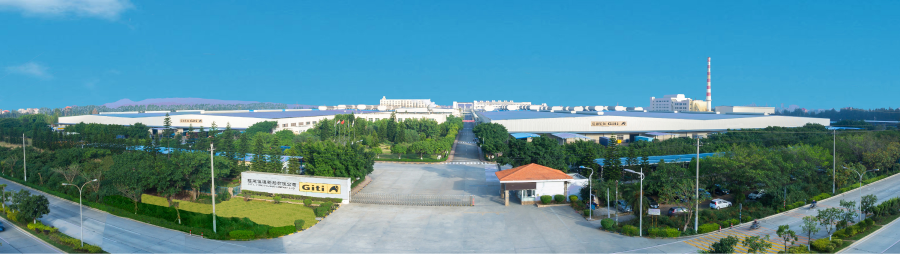
Giti Tire has achieved its first International Sustainability and Carbon Certification PLUS (ISCC PLUS) accreditation for its manufacturing facilities in Anhui and Fujian provinces, China.
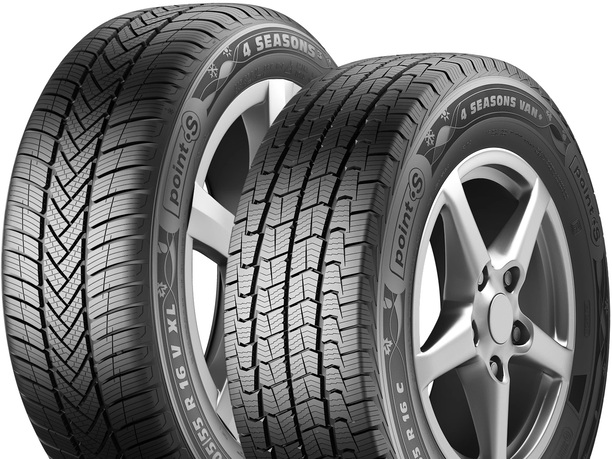
The certification covers key production sites that manufacture Giti and GT Radial branded tyres across passenger car and SUV (PCR), van and light truck (LTR), and heavy truck and bus (TBR) segments for the European market. This achievement positions the company to potentially introduce ISCC PLUS labelled tyres in the future.
Within the tyre industry, ISCC PLUS represents a globally recognised standard that verifies sustainability across raw material sourcing, production processes and supply chain management.
The certification requires manufacturers to meet several stringent criteria, including:
In its 2024 Sustainability Report, Giti Tire reaffirmed its ambitious environmental targets, with the company aiming to achieve net-zero Scope 1 and 2 global emissions by 2050.
The manufacturer is simultaneously investing substantially in renewable energy infrastructure, sustainable production practices and innovative tyre technologies designed to enhance fuel efficiency and reduce carbon emissions.
Dr Pang, Giti Tire's chief sustainability officer, commented: "ISCC PLUS accreditation is a landmark moment in our sustainability journey, verifying that key raw materials come from responsible and fully traceable supply chains, as well as confirming our commitment to people and the planet.
"This recognition places us amongst the industry's premium manufacturers, an achievement that reflects our rising leadership in the global tyre sector."
The new Anhui plant in China will feature a state-of-the-art carbon-neutral production line, scheduled to commence operations in 2026, further demonstrating Giti's commitment to sustainable manufacturing practices.
Tagged with: ISCC PLUS certification, mass balance traceability, sustainable tyre materials, Giti Tire Europe, GT Radial, Scope 1 and 2 emissions, carbon-neutral production line, PCR LTR TBR tyres, renewable feedstocks, circular economy compliance
Editorial Standards & Disclaimer
Tyre News Media is an independent industry publication. Our reporting is based on information available at the time of publication, including company announcements, regulatory filings, official data, research and other sources considered reliable.
Articles may include independent analysis and editorial interpretation. Where appropriate, company statements and third-party claims are attributed to their source. Analysis, estimates and forward-looking observations should not be read as statements of established fact.
Tyre News Media takes reasonable steps to ensure accuracy but welcomes corrections, clarifications and responses from organisations or individuals covered in our reporting. If you believe information is inaccurate or requires clarification, please contact info@tyrenews.co.uk. Material errors will be corrected as appropriate.
Commercial relationships, advertising and sponsorship do not determine Tyre News Media's editorial coverage or conclusions.














%20(1).png)