


.jpg)

For three days in Cologne, the global tyre industry came together to showcase new products, technologies and business strategies.
With around 400 exhibitors from 33 countries and approximately 14,600 visitors representing 110 nations, The Tire Cologne 2026 once again demonstrated why it remains one of the industry's leading international trade fairs.
But beyond the product launches and exhibition stands, several broader themes emerged.
Rather than reviewing the exhibition company by company, Tyre News Media has identified the nine trends that best explain where the tyre industry is heading.
One of the clearest messages throughout the exhibition was the continued importance of Europe for manufacturers expanding their international footprint.
Several exhibitors used Cologne to outline long-term regional growth strategies rather than simply launching products.
Triangle Tyre reinforced its European ESG ambitions while highlighting sustainability and manufacturing investment as central to its future strategy.
ZC Rubber presented its latest European product plans under the Westlake brand, demonstrating continued investment in products developed specifically for the region.
Sailun combined its "Smart Performance" positioning with continued investment in products developed specifically for Europe. During the exhibition, Paul Hicks, Product Manager Europe for PCR and TBR, introduced the Atrezzo 4Seasons Ultra, Sailun's latest all-season tyre for the European market. Launched at the end of 2025, the tyre has been engineered to deliver balanced performance across dry, wet and winter conditions, reflecting the company's strategy of developing products tailored to regional customer needs while strengthening its position in Europe's growing all-season segment.
JK Tyre, Sentury and Universal Tyres also used the exhibition to reinforce their European ambitions, strengthening relationships with distributors and customers while outlining their long-term regional growth strategies.
Advance Tyre also highlighted major developments since the previous exhibition, including production from its Vietnam facility and preparations for future manufacturing in Morocco.
Collectively, these announcements reflected a market where Europe continues to be viewed as strategically important despite ongoing economic uncertainty.
Manufacturing innovation featured heavily throughout the exhibition.
Automation, digitalisation and production efficiency are becoming just as important as tyre performance itself.
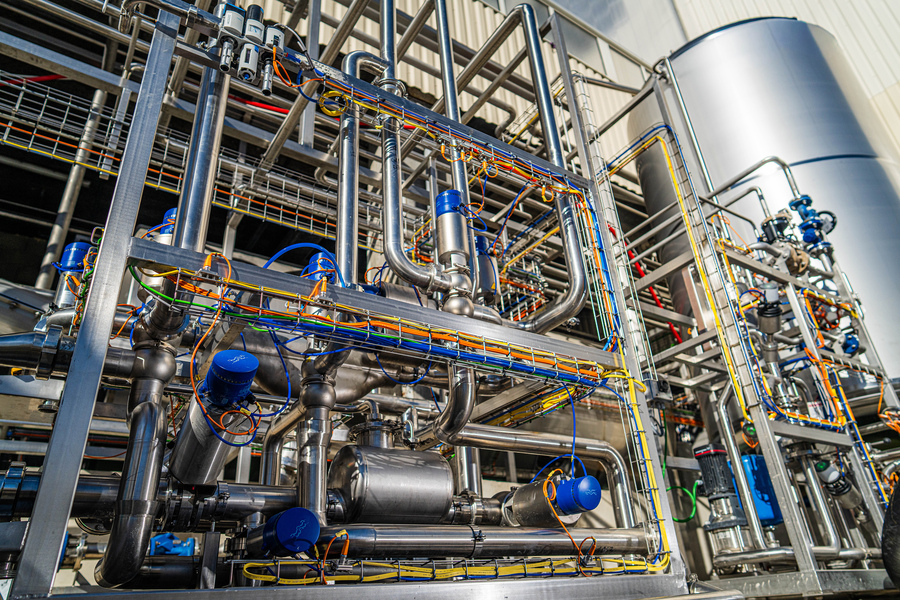
ACE Chemical showcased an automated in-line direct-foaming system designed to improve production efficiency for noise-reducing tyres used on electric vehicles.
Several manufacturers also highlighted increasing investment in intelligent production facilities, automation and advanced manufacturing processes designed to improve quality, efficiency and sustainability.
The message was clear. Tomorrow's tyre factories will increasingly combine engineering expertise with digital manufacturing technologies.
If previous exhibitions treated sustainability as a corporate responsibility topic, Cologne 2026 demonstrated that it has become a commercial strategy.
Circular economy themes were more prominent than ever.
Dedicated conference sessions explored recycling, remanufacturing and alternative raw materials.
Triangle highlighted its wider ESG strategy.
The Alliance for Future Tyres (AZuR) used the exhibition to present new research into the future of retreading and called for stronger political support for sustainable tyre solutions.
Michelin demonstrated how tyre manufacturers are increasingly combining physical products with digital fleet services. At the company's stand, visitors saw the new MICHELIN X Multi D2 295/80 R22.5 ahead of its September launch, featuring REGENION technology to deliver up to 15% more mileage and up to 7% lower rolling resistance than its predecessor.
Alongside new product development, Michelin highlighted its four-lives tyre strategy through the MICHELIN X Multi Energy Remix retread, manufactured at its Stoke-on-Trent facility, reinforcing the growing importance of extending tyre life through regrooving and retreading as part of a circular economy approach.
The display also showcased AI-powered technologies from MICHELIN Connected Fleet, including AI Assistant, AI Cameras and Automated Inspection systems, demonstrating how artificial intelligence is becoming an increasingly important tool for improving fleet efficiency, safety and total operating costs. Together, the technologies illustrated Michelin's broader strategy of integrating advanced tyre engineering, digital services and lifecycle management into a single mobility offering.
Across the show, manufacturers increasingly linked environmental performance with business resilience, manufacturing efficiency and customer value.
While products such as connected tyres and AI-powered fleet platforms were demonstrated by companies including Hankook, Michelin, Pirelli and ZC Rubber, the broader message was that tyres are increasingly becoming part of a connected mobility ecosystem, where digital services, predictive maintenance and data-driven fleet management are becoming just as important as the tyre itself.
Commercial vehicle technology continued to move beyond the tyre itself.
Hankook used Cologne to connect tyre development with artificial intelligence, future mobility and fleet optimisation.
Connected tyre technologies, digital fleet management and predictive maintenance featured across multiple exhibitors, reinforcing the industry's move towards data-driven fleet operations.
Manufacturers increasingly presented tyres as part of wider fleet management solutions rather than standalone products.
This reflects growing demand from transport operators seeking lower operating costs, higher uptime and improved lifecycle performance.
PRINX demonstrated how commercial tyres are becoming technology platforms
That evolution was also reflected by PRINX, which used The Tire Cologne 2026 not only to launch its new XELERA EcoLine truck tyre for long-haul transport, but also to present the wider technology ecosystem supporting its commercial vehicle strategy.
During an evening event overlooking Cologne, PRINX welcomed customers, distributors, media representatives and business partners from across Europe while celebrating the company's 50th anniversary and a decade of PRINX Europe.
Alongside the XELERA EcoLine launch, the company showcased several technologies designed to improve fleet efficiency and tyre performance. These included Matrix Technology, featuring a five-belt carcass construction developed to enhance durability, stability and load-carrying capability, together with InkTech Technology for improved tyre identification and sidewall optimisation.
PRINX also highlighted XChip, its intelligent tyre management platform capable of monitoring tyre pressure, temperature, mileage, tread depth and load conditions in real time. The system reflects a wider industry trend towards connected tyres and predictive fleet maintenance, where data is becoming just as valuable as the tyre itself.
The launch demonstrated how manufacturers are increasingly positioning commercial tyres within broader fleet management solutions focused on uptime, efficiency and total operating cost, themes that were visible throughout The Tire Cologne 2026.
Innovation extended well beyond tyre manufacturing.
The Walk of Services highlighted how rapidly workshops are evolving.
Digital inspection tools, advanced wheel alignment systems, tyre management software and automated workshop equipment all featured prominently.
As vehicle technology becomes increasingly sophisticated, investment in workshop capability is becoming essential.
The exhibition reinforced that future competitiveness will depend not only on the tyres themselves, but also on the technology supporting installation, inspection and maintenance.
The off-highway sector enjoyed a significantly higher profile than at previous editions of the exhibition.
The inaugural Global OTR Conference reflected growing international demand across mining, construction, quarrying, ports and heavy industry.
Manufacturers demonstrated increasing investment in specialist products designed for demanding operating environments, while discussions focused on productivity, durability and total cost of ownership.
The conference highlighted how off-highway tyres are becoming an increasingly important part of wider industry conversations.
One noticeable trend was the confidence shown by emerging international manufacturers.
Universal Tyres described its first appearance at the exhibition as a significant milestone.
Prinx launched its new Xelera truck tyre range.
Sentury outlined plans for future European manufacturing.
Hubtrac discussed expansion of its commercial vehicle portfolio.
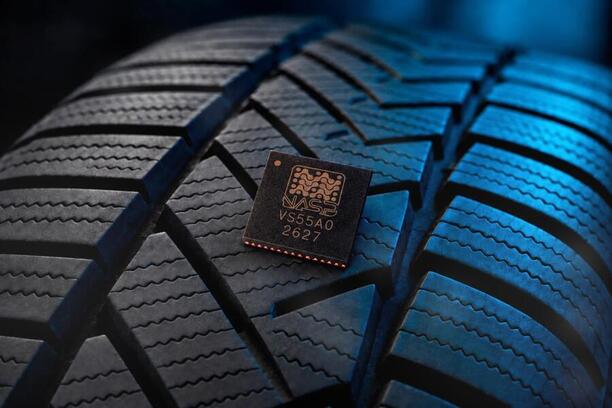
NAMA Tires highlighted continued investment in passenger car tyre production across Thailand and Cambodia.
Together these announcements demonstrated increasing confidence among manufacturers seeking to strengthen their European presence through investment, product development and closer customer engagement.
Perhaps the biggest conclusion from The Tire Cologne 2026 was that every major trend is becoming increasingly connected.
Manufacturing is becoming digital.
Fleet management is becoming data driven.
Sustainability is influencing product development.
Artificial intelligence is supporting workshop efficiency.
Connected tyres are improving maintenance planning.
European expansion increasingly depends on manufacturing capability, logistics and local customer support.
Rather than existing as separate topics, these developments now reinforce one another.
The tyre industry is evolving into a far more integrated ecosystem where technology, manufacturing, sustainability, logistics and customer service work together.
.jpg)
One of the most noticeable developments at The Tire Cologne 2026 was the continued evolution of the exhibition itself.
While new tyres, equipment and technologies remained central to the show, knowledge sharing took on an increasingly important role through the expanded TIRE STAGE programme.
Across the three days, visitors were able to attend presentations, panel discussions and expert sessions exploring many of the industry's biggest challenges and opportunities.
Topics ranged from artificial intelligence, intelligent manufacturing and digitalisation to circular economy, recycling, retreading, robotics, market trends, regulation and workforce development.
Alongside the TIRE STAGE, initiatives including the Walk of Services, the Global OTR Conference and dedicated circular economy activities demonstrated how The Tire Cologne is evolving beyond a traditional trade exhibition into a platform for industry learning and collaboration.
For visitors, the event offered far more than product launches. It became an opportunity to hear directly from manufacturers, technology providers, policymakers and industry experts discussing the future direction of the global tyre industry.
That shift reflects a broader change taking place across the sector. As technology develops more rapidly and business challenges become increasingly interconnected, access to knowledge is becoming just as valuable as access to products.
.png)
If there was one message from The Tire Cologne 2026, it was that the future of the tyre industry extends well beyond tyres themselves.
Manufacturers are investing in intelligent factories.
Fleet operators are embracing connected technologies.
Workshops are adopting digital tools.
Sustainability has become a commercial priority rather than a standalone initiative.
Perhaps most significantly, the exhibition demonstrated that knowledge sharing is becoming a defining feature of the modern tyre industry. The conversations taking place across the TIRE STAGE, conference programme and exhibition halls reflected many of the themes now explored through Tyre News Media's Future Tyre Industry Hub, including Technology & Innovation, Manufacturing & Supply Chain, Sustainability & Circular Economy, Smart & Connected Tyres and EV & Future Mobility.
As preparations begin for The Tire Cologne's return from 30 May to 1 June 2028, the innovations and discussions that shaped this year's exhibition are likely to influence the tyre industry for many years to come.
Tagged with: The Tire Cologne 2026, tyre industry trends, tyre manufacturing, smart tyres, connected tyres, tyre recycling, circular economy, fleet tyres, workshop technology, OTR tyres, European tyre market, tyre trade fair
Editorial Standards & Disclaimer
Tyre News Media is an independent industry publication. Our reporting is based on information available at the time of publication, including company announcements, regulatory filings, official data, research and other sources considered reliable.
Articles may include independent analysis and editorial interpretation. Where appropriate, company statements and third-party claims are attributed to their source. Analysis, estimates and forward-looking observations should not be read as statements of established fact.
Tyre News Media takes reasonable steps to ensure accuracy but welcomes corrections, clarifications and responses from organisations or individuals covered in our reporting. If you believe information is inaccurate or requires clarification, please contact info@tyrenews.co.uk. Material errors will be corrected as appropriate.
Commercial relationships, advertising and sponsorship do not determine Tyre News Media's editorial coverage or conclusions.















%20(1).jpeg)