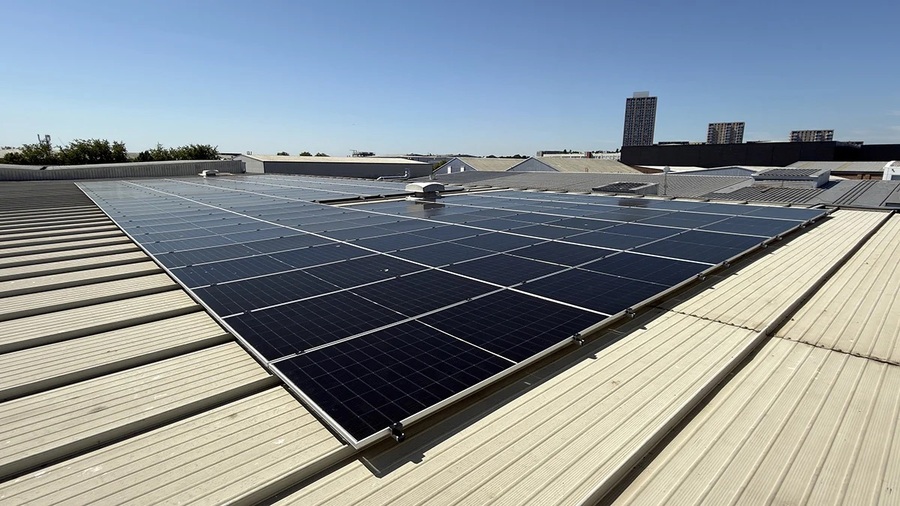

Autogem has installed a further 146 solar panels at its London headquarters, more than doubling its on-site solar capacity as the automotive aftermarket supplier responds to rising electricity demand from fleet electrification. The investment takes the company's installation to 256 panels and a combined stated capacity of 128kWp.
The latest 84kWp installation builds on Autogem's original 110-panel solar array and represents a more substantial operational investment than the headline panel count alone suggests. According to the company, the expanded system is expected to provide around 51% of its annual electricity requirements, with sufficient generation to cover its daylight electricity demand during sunnier months.
Any surplus generated between April and September is expected to be exported to the grid, Autogem said. Those figures are company forecasts rather than independently verified generation data, and actual output will inevitably depend on factors including weather, consumption patterns and the performance of the installation.
The investment is particularly relevant because Autogem is simultaneously increasing its electricity requirements through the electrification of its company vehicle fleet. Rather than treating vehicle electrification and building energy consumption as separate sustainability projects, the company is using additional on-site generation to address part of the new electrical load created by that transition.
Managing director Prashant Chopra said: “Our move towards electric vehicles has significantly increased our electricity usage, so expanding our solar capacity makes perfect sense. We want to reduce our reliance on energy from the grid while making greater use of renewable power generated here at our own site.”
The relationship between EV adoption and electricity generation is potentially the more useful lesson for tyre and automotive aftermarket businesses considering their own transition. Moving company cars and vans away from internal combustion can reduce direct road-transport emissions, but it also transfers a greater proportion of fleet energy demand onto a business's electricity supply.
For businesses with suitable premises, on-site generation can therefore become part of the infrastructure decision surrounding fleet electrification rather than a standalone environmental measure. The economics will differ considerably according to property ownership, roof space, electricity tariffs, vehicle utilisation, charging schedules and capital costs, but Autogem's expansion illustrates how those decisions increasingly overlap.
Autogem's previous solar installation comprised 110 panels, while the company has also introduced EV charging facilities and an EV and hybrid company-car policy. The additional 146 panels bring the total installation to 256, with the combined capacity rising to 128kWp.
The company said the investment forms part of a wider programme that also includes reducing packaging and waste and recycling cardboard and plastics. Chopra described sustainability as an ongoing process spanning energy, vehicles, packaging and product development.
For the wider tyre aftermarket, the development is another example of electrification extending beyond the vehicles entering workshops. As fleets, service businesses, wholesalers and suppliers increase their use of electric vehicles, charging infrastructure and the cost and source of the electricity supporting those vehicles become operational considerations in their own right.
Autogem's next test will be how closely the expanded system's actual generation matches its forecast contribution of 51% of annual electricity demand, particularly as further vehicle electrification changes the company's consumption profile.
Tags: Autogem, solar energy, fleet electrification, EV fleet, renewable energy, tyre aftermarket, automotive aftermarket, solar panels, sustainability, EV charging
Editorial Standards & Disclaimer
Tyre News Media is an independent industry publication. Our reporting is based on information available at the time of publication, including company announcements, regulatory filings, official data, research and other sources considered reliable.
Articles may include independent analysis and editorial interpretation. Where appropriate, company statements and third-party claims are attributed to their source. Analysis, estimates and forward-looking observations should not be read as statements of established fact.
Tyre News Media takes reasonable steps to ensure accuracy but welcomes corrections, clarifications and responses from organisations or individuals covered in our reporting. If you believe information is inaccurate or requires clarification, please contact info@tyrenews.co.uk. Material errors will be corrected as appropriate.
Commercial relationships, advertising and sponsorship do not determine Tyre News Media's editorial coverage or conclusions.





















%20(1).png)
%20(1).jpeg)