
Michelin has inaugurated a joint research laboratory with four French academic partners, bringing together tyre modelling, vehicle data and manufacturing research under a four-year programme valued at approximately €4.5 million.
Named I-TireLab, the initiative was formally launched on 4 November 2026 and will investigate how data and mathematical models can improve tyre condition monitoring, vehicle safety and rubber manufacturing efficiency.
The collaboration involves Michelin, the University of Poitiers, Université Grenoble Alpes, Grenoble INP – UGA and France's National Centre for Scientific Research (CNRS).
A central objective is to develop methods capable of estimating tyre wear and available road grip using sensors already installed in vehicles, potentially providing more detailed information to braking and stability control systems.
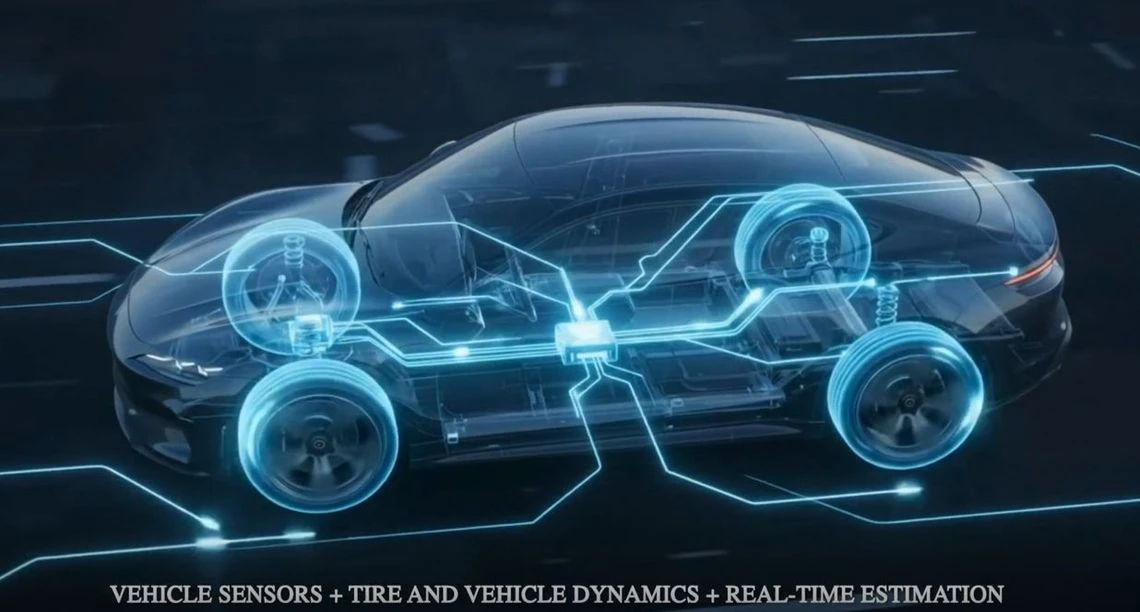
I-TireLab brings together Michelin's expertise in tyre simulation, materials and industrial processes with academic research in mathematical modelling, system-state estimation and control technologies.
The participating research organisations include the Laboratory of Computer Science and Automatic Control for Systems (LIAS) at the University of Poitiers and GIPSA-lab, which is affiliated with Université Grenoble Alpes, CNRS and Grenoble INP – UGA.
The laboratory formalises a research partnership that has already been operating for several years.
Its first research area focuses on estimating tyre condition in real time. By analysing information from existing vehicle sensors, researchers aim to calculate characteristics such as tyre wear and available grip without requiring additional specialised monitoring equipment.
A second area examines how these estimates could influence vehicle behaviour.
Researchers will investigate whether information about tyre condition and grip potential can be incorporated into braking control systems, allowing vehicles to adapt their responses to changing road and tyre conditions.
The intended benefits include improved vehicle stability and more effective control, although these remain research objectives rather than demonstrated results from the new laboratory.
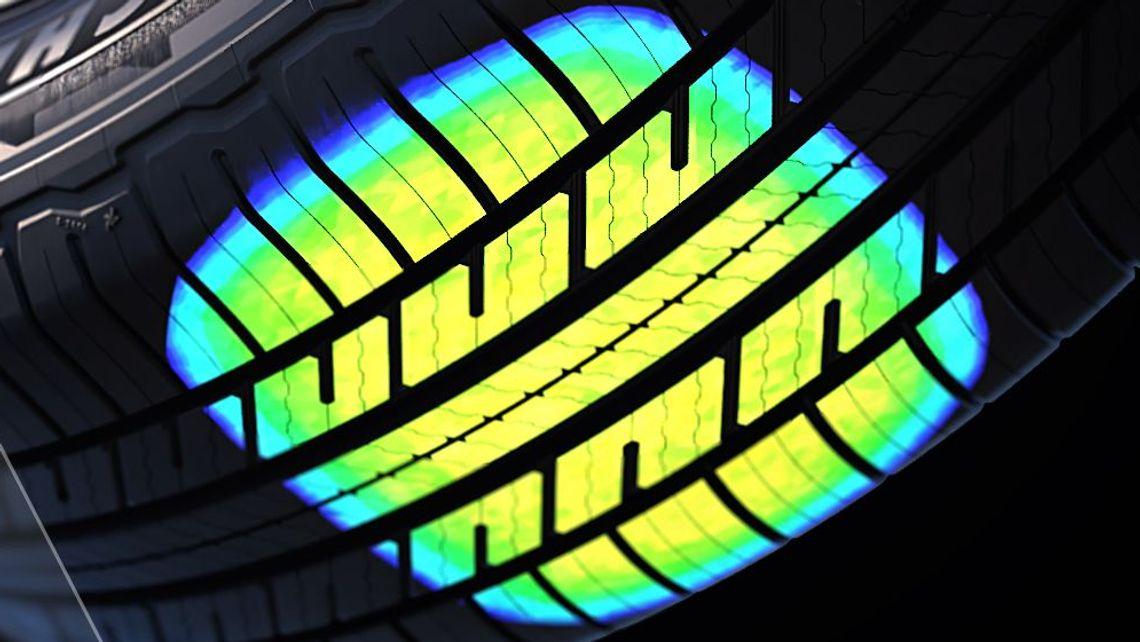
One of the laboratory's potential applications is the continued development of Michelin Touch Intelligence, the manufacturer's tyre digital-twin technology presented in May 2026.
The technology combines existing vehicle sensor information with Michelin's tyre models and data-processing methods to estimate tyre pressure, load, wear and grip.
Unlike systems dependent on sensors installed directly inside the tyre, Michelin's approach is designed to work with existing vehicle data and across different tyre brands.
As previously reported by Tyre News Media, the digital twin is intended to turn vehicle operating data into information that could support predictive maintenance, driving safety and vehicle control.
I-TireLab could help refine the mathematical models underlying this technology, particularly in estimating tyre condition and understanding how available grip changes during use.
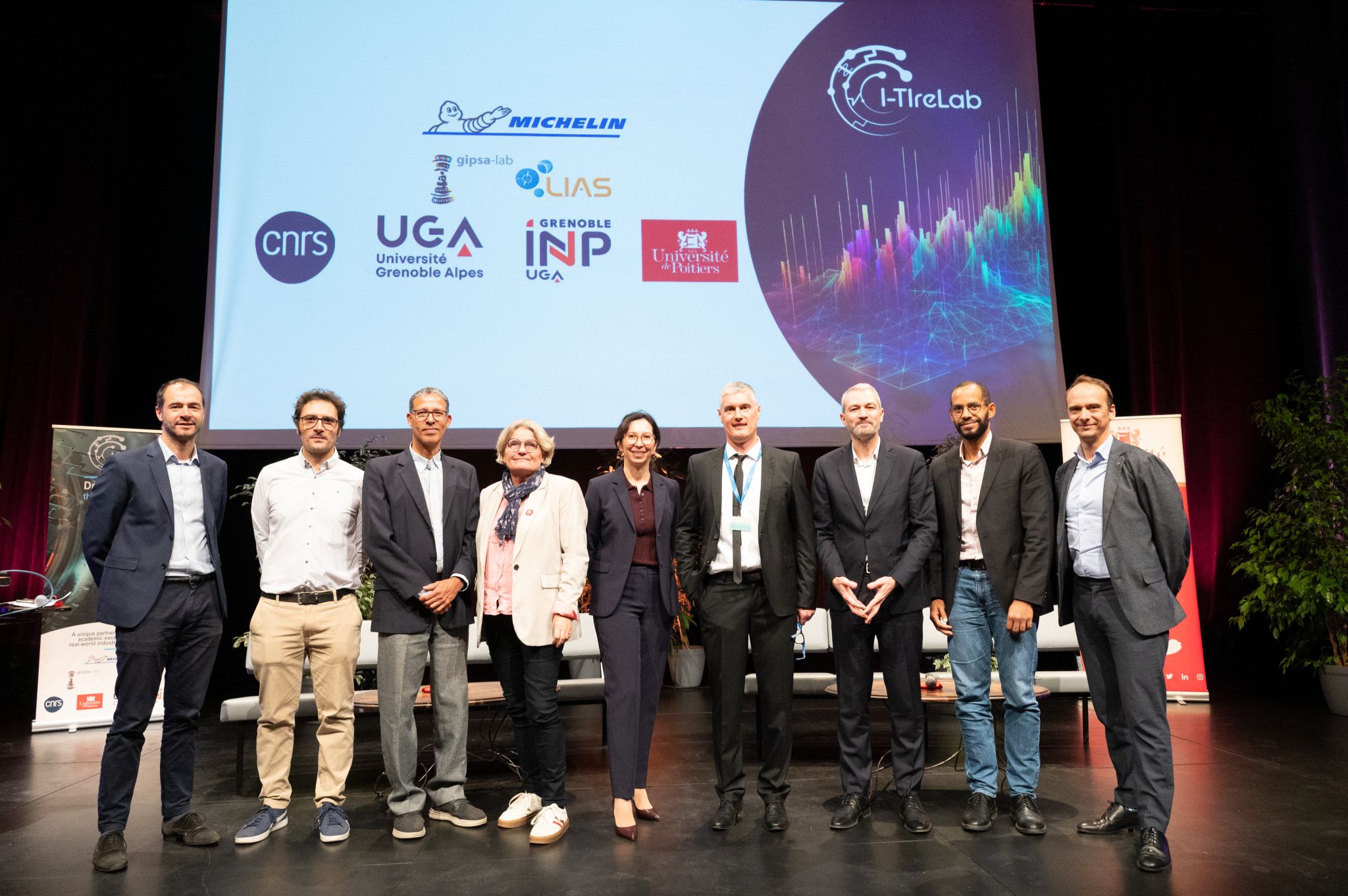
Philippe Jacquin, Michelin General Manager & Director of Research and Development: “I-TireLab will make it possible to turn science into real-world innovations, from tires and tire manufacturing to tire-vehicle interactions. Michelin Touch Intelligence, the tire digital twin is one recent illustration of what that means in practice: when we know more about the tire’s status and grip potential, we can enable vehicle adjustments and optimization.”
Guillaume Mercère, I-TireLab Director, John Martinez-Molina, I-TireLab Co-Director, and Thibault Dairay, I-TireLab Co-Director: "I-TireLab brings together researchers, engineers, and young scientists to make mobility safer, improve our control of tire manufacturing, and explore new possibilities for flexible materials. By drawing on fundamental research, experimentation, and industrial needs, we are developing new methods, training talents, and preparing the innovations of the future, together.”
Mehdi Gmar, CNRS Deputy CEO for Innovation:“I-TireLab once again demonstrates that the expertise and knowledge developed in academic research laboratories—in this case, at GIPSA-lab in modeling and control of complex systems—have industrial applications. This is now the case with Michelin across very different areas: tires on the road, rubber manufacturing, and flexible materials supporting safer, more resource-efficient mobility.”
The laboratory is not a new commercial launch of Touch Intelligence. Instead, its research may contribute to future improvements and applications of the existing technology.
Beyond vehicle applications, I-TireLab will investigate how modelling and control technologies can improve rubber manufacturing processes.
Researchers aim to develop simulation tools capable of predicting production equipment behaviour and identifying more effective operating settings.
The objective is to maintain consistent rubber quality while reducing raw material waste and energy consumption.
Such methods could help manufacturers make better use of production data when controlling complex rubber-processing operations.
However, the laboratory has not announced quantified reductions in energy consumption, material use or manufacturing costs.
The research programme will also examine flexible composite materials capable of changing shape to influence air and water flows.
This work could potentially support further development of Michelin's Wisamo inflatable wingsail technology, designed to assist vessel propulsion and reduce fuel consumption.
The laboratory will use experimental facilities, demonstrators and testing resources provided by its partners to evaluate research methods under conditions approaching real industrial applications.
Michelin will contribute industrial expertise, data and experimental resources, while the academic institutions will provide specialist knowledge in modelling, analysis and control-system development.
The approximately €4.5 million investment covers the overall four-year collaboration. Michelin has not published a detailed funding breakdown between the participating organisations.
The programme also aims to support the training of researchers working across academic and industrial disciplines.
While commercial deployment of the research outcomes has not been confirmed, I-TireLab establishes a formal framework for developing and testing technologies that could influence future tyre monitoring systems, vehicle controls and rubber manufacturing processes.
Tags: Michelin, I-TireLab, Michelin Touch Intelligence, intelligent tyres, tyre digital twin, tyre research, tyre wear monitoring, vehicle grip monitoring, braking technology, rubber manufacturing, tyre innovation
Editorial Standards & Disclaimer
Tyre News Media is an independent industry publication. Our reporting is based on information available at the time of publication, including company announcements, regulatory filings, official data, research and other sources considered reliable.
Articles may include independent analysis and editorial interpretation. Where appropriate, company statements and third-party claims are attributed to their source. Analysis, estimates and forward-looking observations should not be read as statements of established fact.
Tyre News Media takes reasonable steps to ensure accuracy but welcomes corrections, clarifications and responses from organisations or individuals covered in our reporting. If you believe information is inaccurate or requires clarification, please contact info@tyrenews.co.uk. Material errors will be corrected as appropriate.
Commercial relationships, advertising and sponsorship do not determine Tyre News Media's editorial coverage or conclusions.

Tyre Industry Business Directory
Search manufacturers, suppliers, wholesalers, service providers and industry partners across the tyre sector.

Commercial Relationships
Sponsors and advertisers help fund TNM's open-access journalism. Commercial relationships do not determine editorial coverage or conclusions.