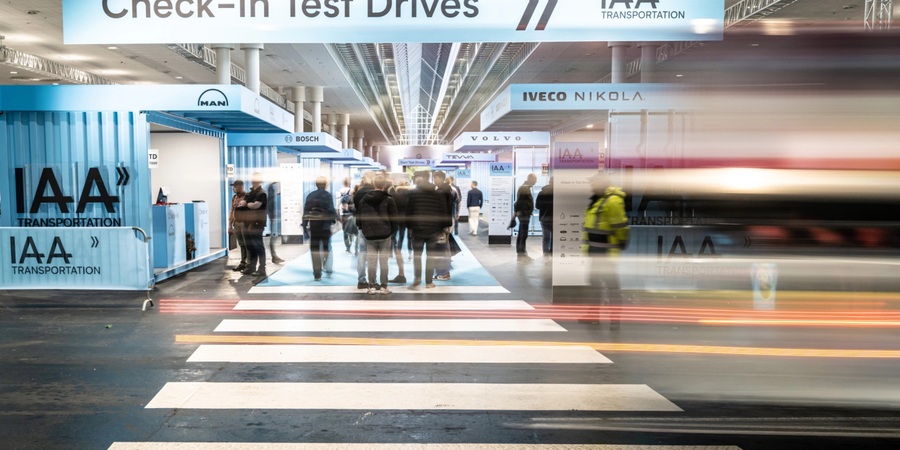

IAA Transportation returns to Hannover from 15–20 September, with Press Day on 14 September. It is not a tyre exhibition, but that is precisely why it matters to the commercial tyre industry: tyres are increasingly connected with vehicle efficiency, fleet data, maintenance, payload and uptime. Here are the exhibitors and technologies worth putting on the itinerary.
IAA Transportation 2026 brings truck and bus manufacturers together with trailer builders, component suppliers, software businesses and logistics operators at the Hannover Exhibition Center. Electrification, charging infrastructure, autonomous driving, software-defined vehicles, artificial intelligence and economic resilience sit among the wider themes surrounding the event.
For tyre businesses, however, the more interesting question is what those changes mean at wheel level. Commercial tyres are increasingly being sold and managed as part of a wider operating-cost proposition involving fuel or energy consumption, vehicle data, maintenance intervention and service networks.
The official IAA exhibitor directory provides the baseline for this tyre-industry guide, but attendance alone is not enough to make every stand equally relevant. The useful test for manufacturers, distributors, commercial tyre dealers, workshops and fleet tyre managers is what they can learn in Hannover that could change a purchasing, servicing or investment decision.
Hankook, Hall 11, Stand E09
Hankook is one of the clearest tyre destinations at IAA. The manufacturer has confirmed new commercial vehicle tyres for trailer and winter applications alongside its existing truck, trailer and bus portfolio. It will also use Hannover to demonstrate its Smart Fleet digital tyre-management proposition.
The trailer emphasis deserves attention. Trailer tyres operate away from much of the visual focus placed on the tractor unit, yet pressure, rolling resistance, mileage and irregular wear can all influence whole-vehicle operating costs. The useful questions around Hankook's new generation will therefore concern not only headline performance but removal mileage, casing value, retreadability and the evidence available from fleet operation.
There is also a larger manufacturing story behind the stand. Tyre News Media has previously reported on Hankook's European production expansion, including plans for a truck and bus tyre production line at its Hungarian plant with annual capacity of up to 800,000 units.
That gives the IAA programme greater strategic significance. New European-focused products, digital fleet management and additional regional manufacturing capacity increasingly form parts of the same proposition: competing for commercial tyre business on availability, operating cost and lifecycle management rather than product specification alone.
Prometeon, Hall 11, Stand E07
Prometeon's IAA programme centres on SuperFleet, its integrated European fleet proposition, alongside its expanding commercial tyre portfolio. The significance is less an individual product launch than the way the company is bringing tyres, service infrastructure and fleet management together.
That provides a practical test of one of the commercial tyre industry's biggest strategic shifts. Manufacturers increasingly want to demonstrate the cost of running a tyre rather than simply its purchase price, making service availability, maintenance records, digital monitoring and casing management potentially as important as the original product specification.
Tyre News Media's previous coverage of Prometeon's fleet strategy has examined this movement towards a more integrated proposition. Hannover should provide an opportunity to establish how far the model has progressed and what role independent service providers will play as manufacturers seek closer relationships with fleet customers.
Prometeon's presence alongside Ford Trucks also deserves attention. Truck manufacturers themselves are increasingly selling uptime, maintenance and connected services. As tyre manufacturers develop comparable propositions, the commercial question becomes who manages the fleet relationship and where dealers, tyre service networks and vehicle manufacturers fit within it.
WESTLAKE, Hall 12, Stand B66
WESTLAKE will use Hannover to present four additions to its Gen II commercial range, the WSL2, WDL2+, WTL2 and WTR PRO, working with Interpneu and Pneuhage Fleet Solution. The products are being positioned around rolling resistance, mileage, fuel efficiency and longer-term fleet performance.
The more significant point is how WESTLAKE intends to compete. Acquisition price remains important, but fleets capable of measuring fuel consumption, removal mileage and service interruptions across large vehicle populations can increasingly test tyre economics over their full working lives.
That makes the combination of Chinese manufacturing, application-specific products, German distribution and fleet-service infrastructure particularly relevant. The competitive question for established European commercial tyre brands is increasingly whether manufacturers such as WESTLAKE can establish credibility not simply on price but on measurable cost per kilometre and supporting service.
The evidence presented to fleets will matter more than positioning. Rolling resistance, mileage, casing quality, retreadability and service availability need to work together if lower acquisition costs are to translate into lower whole-life costs.
PRINX
PRINX brings a different technology question to Hannover with its XELERA EcoLine commercial range. The steer, drive and trailer tyres have received TÜV SÜD certification and are due to receive their first broad public presentation at IAA Transportation 2026.
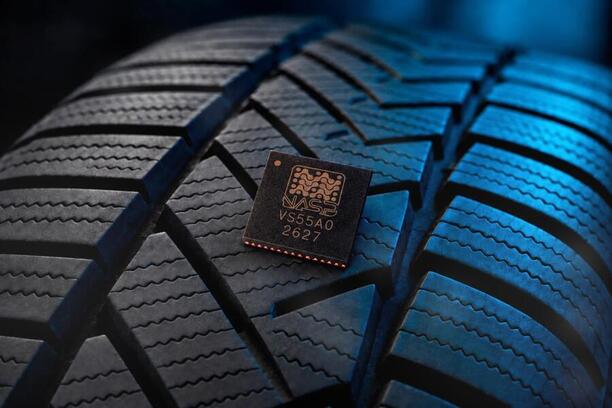
The more interesting element is XChip. PRINX says its connected technology can provide fleets with information including pressure, temperature, load, mileage and tread depth. If those capabilities translate reliably into fleet operation, the potential goes considerably further than conventional tyre-pressure monitoring.
Tread condition, load and operating history could influence inspection scheduling, tyre rotation, replacement decisions and potentially casing management. The commercial test at IAA will therefore be how the technology works in practice: its accuracy, connectivity with third-party fleet systems, operating cost and whether the information reduces manual intervention or simply adds another data source.
PRINX also illustrates a broader theme running through the exhibition. The industry's connected-tyre argument is moving from whether a tyre can generate data towards whether fleets can use that information to save money or prevent downtime.
Kumho
Kumho is among the tyre manufacturers confirmed for IAA Transportation 2026, although detailed primary-source information about its Hannover programme has not yet been established.
That distinction matters. Confirmation in an exhibitor directory establishes attendance, but it does not justify attributing products or technology to a stand before the manufacturer has announced them.
Kumho is therefore one to monitor as September approaches. Further programme detail could make the stand more significant, particularly if the manufacturer uses Hannover to develop its European commercial-vehicle or fleet proposition.
Speedline Truck / Ronal Group, Hall 25, Stand C17
Speedline Truck will bring its forged aluminium commercial-vehicle wheels and UltraShield surface technology to Hannover. UltraShield is designed to reduce dirt adhesion and cleaning requirements, giving the product an obvious maintenance argument for intensive commercial operation.
There is a wider efficiency question behind aluminium wheels, however. Vehicle mass matters to payload and energy consumption, making wheel weight potentially more commercially significant as fleets examine every part of the tractor and trailer for efficiency gains.
That becomes particularly interesting around battery-electric trucks, where vehicle mass and payload remain important operational considerations. The useful calculation for fleets is not simply how much lighter an aluminium wheel is, but whether weight, durability and maintenance savings across the complete wheel set justify the investment over the vehicle's duty cycle.
Alcoa Wheels
Alcoa Wheels is also confirmed among the wheel-sector exhibitors. Its presence gives fleets an opportunity to examine the commercial case for aluminium wheels alongside competing approaches rather than treating weight reduction as an automatic benefit.
Wheel mass can affect payload and vehicle efficiency, while corrosion resistance, cleaning requirements, repair practices and durability influence maintenance expenditure. These factors become more useful when translated into operating economics rather than compared as isolated technical specifications.
For tyre dealers and workshops, wheels also sit directly within the service environment. Changes in wheel materials, maintenance requirements and fleet specifications therefore have implications beyond vehicle manufacturers and operators.
Some of the most relevant tyre technology at IAA will not be found on tyre manufacturers' stands.
BPW provides an important example. Its intelligent running-gear and telematics technologies connect vehicle condition with maintenance decisions, including information around tyre pressure, axle load and other operating parameters. Its AirSave system can also monitor and regulate trailer tyre pressure.
That has additional regulatory relevance because tyre-pressure monitoring requirements under UN ECE R141 have extended to trailers. What was once primarily a workshop or driver inspection issue can increasingly become a remotely visible maintenance event.
For commercial tyre dealers and service providers, this creates both an opportunity and a strategic challenge. Earlier identification of pressure problems can improve intervention before failure, but tyre businesses also need to remain connected to the data and service workflow rather than becoming the contractor called only after another platform has diagnosed the problem and allocated the work.
Schmitz Cargobull provides another example. Its connected trailer and service proposition brings vehicle condition and fleet availability into a central management environment. Tyre condition increasingly sits within that larger operational picture rather than existing as a separate maintenance category.
Taken together, the exhibitors point towards a more important trend than any individual tyre launch.
Hankook is combining new commercial products with Smart Fleet and additional European production. Prometeon is putting SuperFleet around its tyres and service network. PRINX is extending connected tyre data through XChip, while WESTLAKE is combining new-generation products with established European distribution and fleet-service infrastructure.
The common theme is the attempt to demonstrate measurable operating value across the tyre's working life.
That potentially changes the relationship between manufacturer, distributor, dealer and fleet. A manufacturer able to identify a tyre, monitor its condition, predict intervention, allocate servicing and record its operating history has a much closer relationship with the asset than a company simply supplying replacement tyres.
Independent commercial tyre businesses are not necessarily displaced by that change. Large service networks remain essential because physical inspections, fitting, repair and roadside intervention still have to happen. But their position within the value chain could increasingly depend on integration with the systems deciding when and where that work takes place.
Three questions should therefore run through a tyre-industry visit to IAA Transportation.
First, can manufacturers substantiate their increasingly familiar total-cost-of-ownership claims? Mileage, rolling resistance, retreadability, energy consumption and downtime are useful measures only when the comparison basis is clear. Better fleet data should make those claims increasingly testable in real operation.
Second, is connected tyre technology producing actionable information? Collecting pressure, temperature, load or tread information has limited commercial value unless the data changes a maintenance decision, prevents downtime or reduces operating cost.
Third, who controls the commercial tyre lifecycle? As tyre manufacturers, vehicle OEMs, telematics companies and service networks all develop connected fleet propositions, access to the customer and the vehicle's operating data could become as strategically important as the tyre itself.
Electrification adds another layer. Higher vehicle mass, torque characteristics, load requirements and energy consumption can affect tyre specification, but broad claims that electric trucks inherently consume tyres faster need evidence. Hannover should instead provide an opportunity to examine how manufacturers balance rolling resistance, load capacity, durability and mileage for specific electric-commercial-vehicle duty cycles.
That is ultimately why IAA Transportation matters to the tyre industry. The tyre remains a physical product, but the commercial decision around it is becoming harder to separate from the wheel, axle, trailer, vehicle data and maintenance operation surrounding it.
Hannover should show how far that integration has progressed and, equally importantly, where the industry's connected-fleet ambitions still run ahead of everyday deployment.
Exhibitor and stand details were correct at the time of updating. The official IAA Transportation exhibitor directory is updated regularly, so visitors should check the latest information before travelling.
Tags: IAA Transportation 2026, IAA Hannover 2026, truck tyres, commercial vehicle tyres, Hankook, Prometeon, WESTLAKE, fleet tyre management, connected tyres, trailer tyres, TPMS, truck wheels
Editorial Standards & Disclaimer
Tyre News Media is an independent industry publication. Our reporting is based on information available at the time of publication, including company announcements, regulatory filings, official data, research and other sources considered reliable.
Articles may include independent analysis and editorial interpretation. Where appropriate, company statements and third-party claims are attributed to their source. Analysis, estimates and forward-looking observations should not be read as statements of established fact.
Tyre News Media takes reasonable steps to ensure accuracy but welcomes corrections, clarifications and responses from organisations or individuals covered in our reporting. If you believe information is inaccurate or requires clarification, please contact info@tyrenews.co.uk. Material errors will be corrected as appropriate.
Commercial relationships, advertising and sponsorship do not determine Tyre News Media's editorial coverage or conclusions.













%20(1).jpeg)