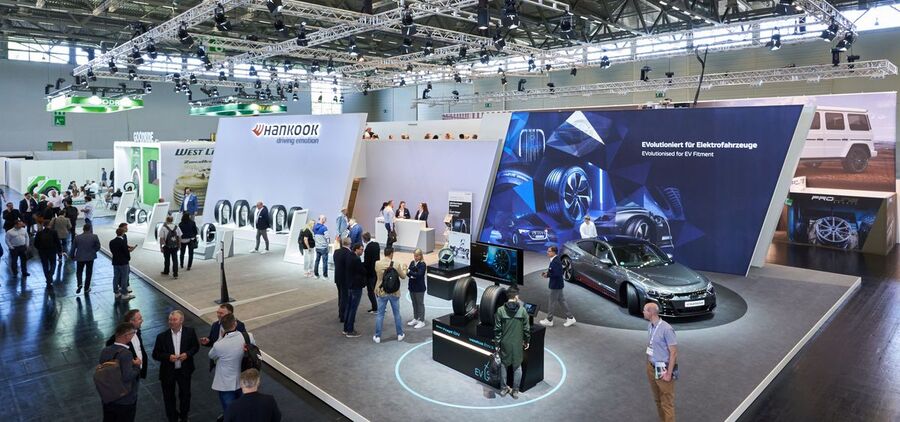

At Cologne, the company presented the Winter icept evo 4 and Winter icept evo 4 SUV alongside its Sustainable 3D-printed Concept Tyre and Wheelbot 2. The mix gave retailers, distributors and fleet operators a view of Hankook’s immediate product priorities, while also showing how the company sees tyre design changing for electric, autonomous and urban vehicles.
The most relevant trade angle was not a single product launch. It was the way Hankook linked current commercial tyres with longer-term development tools and mobility concepts.
At Cologne, the company presented the Winter icept evo 4 and Winter icept evo 4 SUV alongside its Sustainable 3D-printed Concept Tyre and Wheelbot 2. The mix gave retailers, distributors and fleet operators a view of Hankook’s immediate product priorities, while also showing how the company saw tyre design changing for electric, autonomous and urban vehicles.
The approach followed recent Tyre News coverage of Hankook’s broader European growth, including its 85th anniversary update and the iON GT’s use of sustainable materials. Tyre News also previously reported on Hankook’s 3D-printed Sustainable Concept Tyre and WheelBot 2, first shown at Design Innovation Day 2025 in Korea.
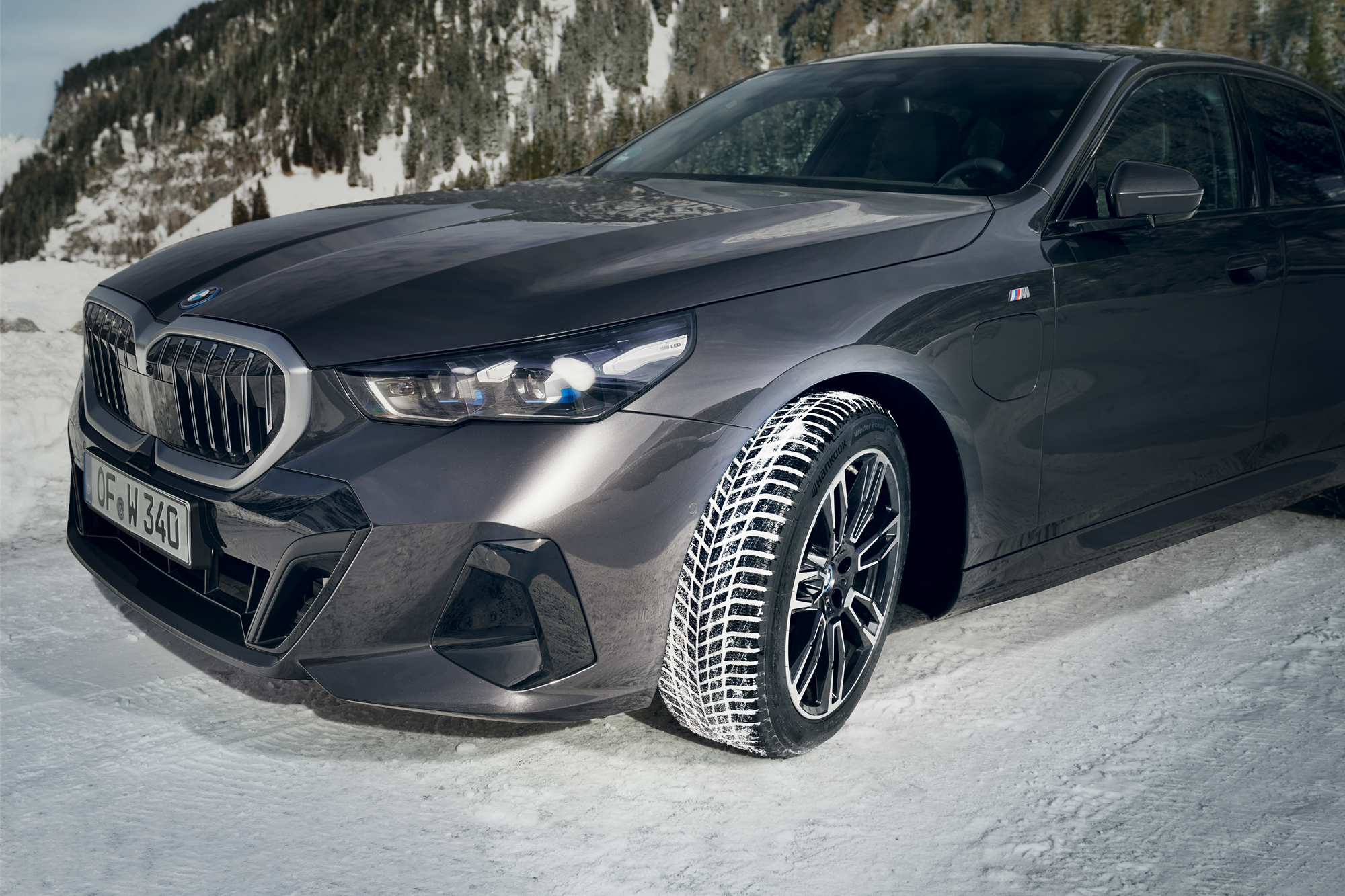
The Winter i*cept evo 4 was the most immediate retail product story. Hankook said the new passenger car and SUV winter range improved rolling resistance, reduced rolling noise and increased mileage by 15 per cent compared with its predecessor.
The company attributed the lower rolling resistance to reduced curing temperature and improved silica dispersion. It said the tread had also been reworked with diagonally cut blocks and redesigned central grooves to improve comfort and snow performance.
Jongho Park, President and COO of Hankook Tire Europe, said the new tyre “combines safe driving characteristics with maximum comfort” while meeting demand for efficiency through lower rolling resistance.
The range covered 93 passenger car sizes and 75 SUV sizes, spanning 17 to 22 inches. That breadth mattered for tyre dealers because winter fitments increasingly need to serve heavier, higher-powered SUVs and crossover vehicles.
Hankook also used the show to explain how virtual tyre development had changed original equipment work. According to the company, more than 100 OE programmes had used virtual-based performance evaluation since 2021, with development time cut by around 30 per cent.
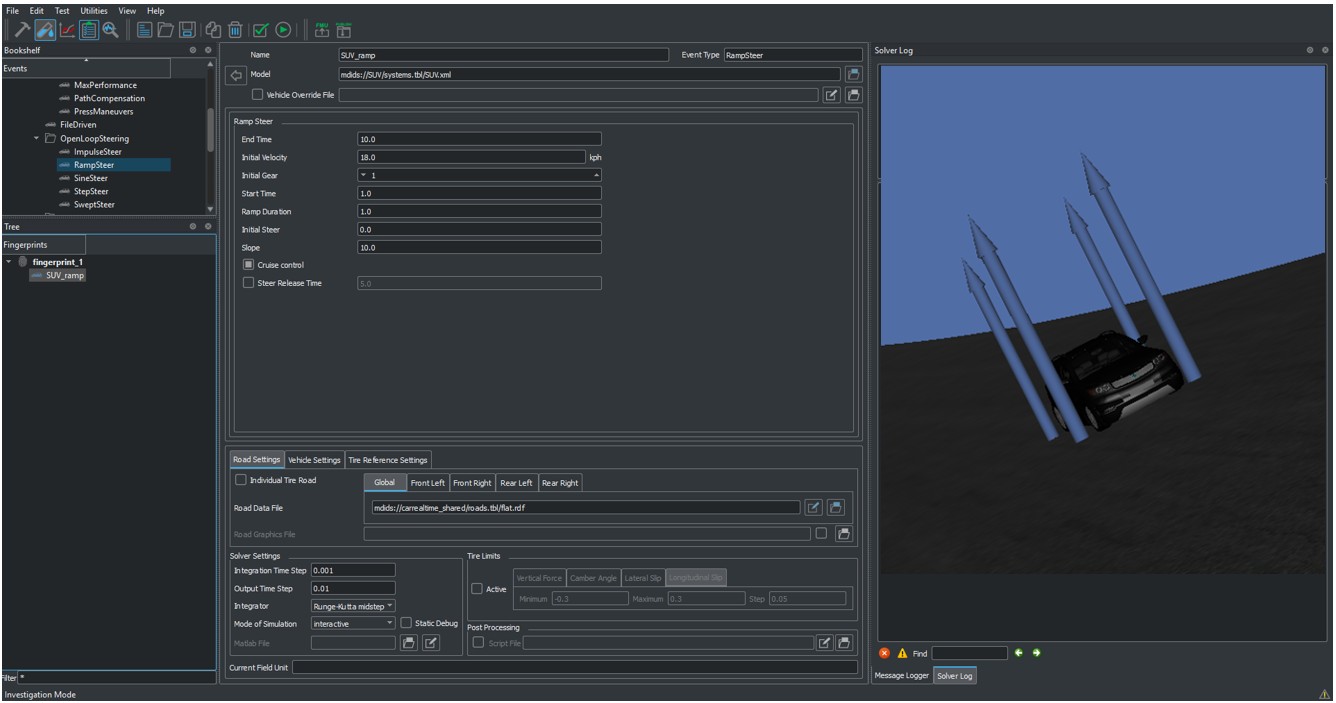
The company said tyre models had become a commercial requirement for many vehicle makers. In practice, OEMs needed accurate tyre data for vehicle simulation long before physical prototypes existed. Hankook’s Europe Technical Center described this as a digital ecosystem built around artificial intelligence, simulation and tyre digital twins.
Yonglae Lee, Senior Engineer at Hankook Tire’s Europe Technical Center, and Kenneth Richardson, Research Engineer at the same centre, said virtual testing started at the concept stage before physical tyres existed. They said AI systems could propose specifications in minutes, using a database built from more than 20 years of development history.
Hankook said this did not remove physical testing. Instead, it shifted physical testing from discovery towards verification. That distinction was important for OE customers, where the aim was to secure approval at the first physical tyre test.
The technical message was measured. Hankook did not present AI as a replacement for tyre engineering. The company said its approach combined physics-based modelling, finite element methods, artificial intelligence and real-world validation.
.jpg)
This mattered because tyres remained one of the most complex components in vehicle simulation. Load, slip, temperature, speed, wear state and surface condition all influenced behaviour. Hankook said future development would depend on model families rather than a single tyre model.
The roadmap presented in Cologne included hard-packed snow traction work in 2026, wet asphalt validation in 2027, advanced NVH models in 2028 and fuller lifecycle digital twins with in-service data by 2029 and 2030.
Hankook’s sustainability story centred on both product content and production methods. The Sustainable 3D-printed Concept Tyre was a non-pneumatic tyre produced through additive manufacturing. It used a one-piece wheel-and-tyre structure, with harder material at the centre and softer polymer-based material near the tread.
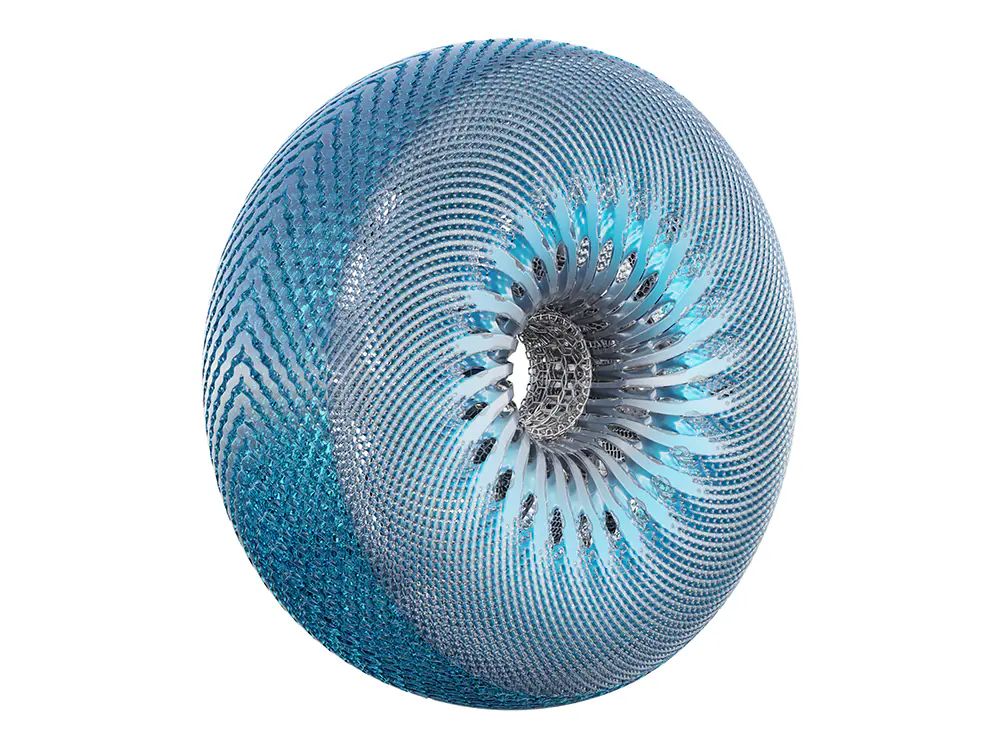
Sung Hee Youn, Team Manager at Hankook’s Design Innovation Studio, said the concept tyre showed how the company was “rethinking the role, form and function of the tyre from the ground up”.
The company said the concept explored biodegradable, self-healing and recyclable materials. It also said 3D printing could reduce waste by using only the material needed for a specific structure.
That remained a future-facing proposition rather than a near-term production claim. Hankook acknowledged that material durability, adhesion, temperature resistance, load capacity and regulation remained major barriers before such tyres could reach series production.
The sustainability context was strengthened by Hankook’s expanding ISCC PLUS-certified plant network. Tyre News recently reported that the Jiaxing plant in China became Hankook’s fourth certified site, following Geumsan, Rácalmás and Daejeon. ISCC PLUS certification is used to verify traceability and sustainability characteristics for alternative feedstocks and recycled materials.
Wheelbot 2 gave the Cologne presentation a future-mobility angle. Hankook described it as a functioning robot platform capable of moving in all directions, with potential use cases including logistics, last-mile delivery, airport mobility and autonomous urban shuttles.
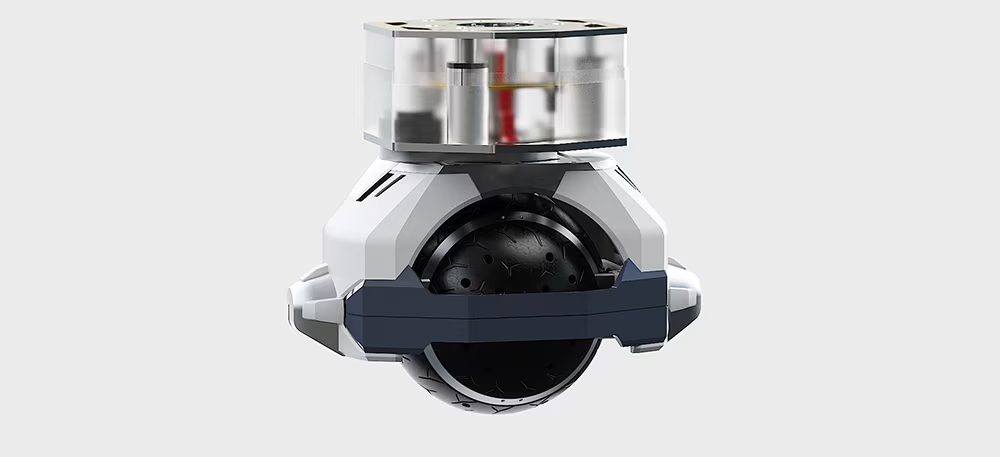
For tyre trade readers, the significance was not that such platforms would quickly replace conventional vehicles. It was that non-pneumatic tyres may find their first real markets in low-speed, driverless and maintenance-sensitive applications.
Hankook said these applications were likely to develop faster in parts of Asia, where dense urban environments and autonomous services were more advanced. Europe may adopt such technologies more slowly, but OE development cycles already required tyre makers to prepare years ahead of launch.
The Cologne presentation showed how a premium tyre manufacturer was trying to connect conventional replacement demand with new development models. Dealers could see the Winter i*cept evo 4 as the direct commercial product. OEMs and fleet technology partners were more likely to focus on virtual development, digital twins and non-pneumatic mobility concepts.
The risk was that concept tyres could appear remote from daily tyre trade priorities. The editorial value lay in the link between those concepts and current industry pressures: faster OE development, lower rolling resistance, sustainable material traceability, reduced prototype waste and future urban mobility requirements.
Tagged with: Hankook, The Tire Cologne 2026, Winter i*cept evo 4, virtual tyre development, tyre digital twin, 3D-printed tyre, non-pneumatic tyre, sustainable materials, OE tyres, autonomous mobility, rolling resistance, winter tyres
Editorial Standards & Disclaimer
Tyre News Media is an independent industry publication. Our reporting is based on information available at the time of publication, including company announcements, regulatory filings, official data, research and other sources considered reliable.
Articles may include independent analysis and editorial interpretation. Where appropriate, company statements and third-party claims are attributed to their source. Analysis, estimates and forward-looking observations should not be read as statements of established fact.
Tyre News Media takes reasonable steps to ensure accuracy but welcomes corrections, clarifications and responses from organisations or individuals covered in our reporting. If you believe information is inaccurate or requires clarification, please contact info@tyrenews.co.uk. Material errors will be corrected as appropriate.
Commercial relationships, advertising and sponsorship do not determine Tyre News Media's editorial coverage or conclusions.

















%20(1)%20(1).png)


%20(1).jpeg)