Bridgestone Americas and Penske Transportation Solutions have reported first-phase results from their Decarbonization Lab, a joint programme testing near-term CO₂ reduction measures for commercial fleets. The work covered more than 500,000 fleet miles and focused on tyres, retreads, renewable diesel and route optimisation under real operating conditions.
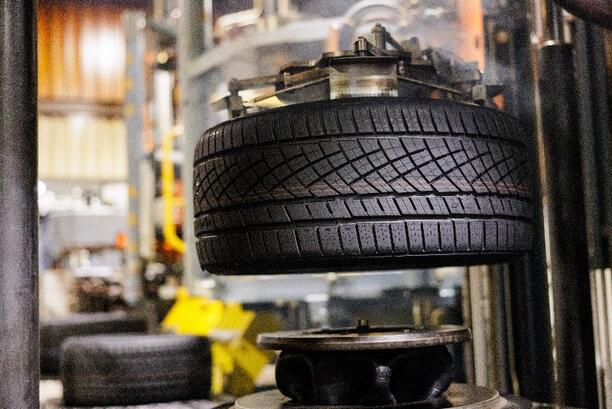
The strongest tyre-related finding came from a package combining low-rolling-resistance retreads, Bridgestone casings and IntelliTire pressure monitoring. Bridgestone and Penske said this delivered a 6.35% improvement in miles per gallon across the first phase of testing.
For tyre fleets, the result is relevant because it links casing quality, retreading and pressure control to measured fuel economy. That makes the trial more useful than a broad sustainability claim. It also supports wider industry interest in retreading as a practical route to lower lifecycle emissions and better cost control.
Tyre News has recently reported similar pressure behind commercial retreading, including Hankook’s positioning of Alphatread and SmartLife around fleet sustainability and Vaculug’s call for retread tyres in UK public fleets. Both stories reflect a market shift towards measurable tyre lifecycle performance.
The Lab also examined renewable diesel use in Tennessee. The companies said the aim was not to prove the fuel’s emissions benefit, which they said was already established, but to test practical deployment outside Low Carbon Fuel Standard states such as California and Oregon.
That point matters for logistics operators because fuel availability, maintenance impact and operating cost are often more decisive than headline emissions claims. Drop-in fuels can support transition planning where full electrification is not yet practical for every route or duty cycle.
Penske and Bridgestone logistics and engineering teams are also working on Bridgestone’s automotive tyre retail distribution network. The collaboration is projected to remove around 152,000 miles from the network. If scaled across the Penske-Bridgestone dedicated fleet, the companies said this could equate to a 4–6% reduction in CO₂ emissions.
This gives the announcement a broader fleet-management angle. Tyre choice is part of the picture, but emissions reductions also depend on routing, asset use and disciplined data capture. The findings align with recent Tyre News coverage of fleet tyre policies, including Mid and East Antrim Borough Council’s Michelin tyre and telematics approach.
Erik Seidel, head of sustainability for Bridgestone in the Americas, Europe, Middle East and Africa, said the companies’ long relationship had included IndyCar activity and “deploying millions of retreaded tires across the Penske fleet”. He said the Decarbonization Lab showed how sustainable transformation can be accelerated through collaboration.
Bill Combs, senior vice president, partnership and sustainability strategy at Penske, said the companies had a history of finding solutions that benefit customers and the wider industry.
Bridgestone and Penske plan to continue the programme with a second phase in 2026. Leaders from both companies are also scheduled to discuss the first-phase findings at ACT Expo 2026 in Las Vegas.
Tagged with: Bridgestone, Penske, fleet decarbonisation, retread tyres, low rolling resistance, IntelliTire, tyre pressure monitoring, renewable diesel, route optimisation, truck tyres, CO₂ emissions, commercial fleets
Editorial Standards & Disclaimer
Tyre News Media is an independent industry publication. Our reporting is based on information available at the time of publication, including company announcements, regulatory filings, official data, research and other sources considered reliable.
Articles may include independent analysis and editorial interpretation. Where appropriate, company statements and third-party claims are attributed to their source. Analysis, estimates and forward-looking observations should not be read as statements of established fact.
Tyre News Media takes reasonable steps to ensure accuracy but welcomes corrections, clarifications and responses from organisations or individuals covered in our reporting. If you believe information is inaccurate or requires clarification, please contact info@tyrenews.co.uk. Material errors will be corrected as appropriate.
Commercial relationships, advertising and sponsorship do not determine Tyre News Media's editorial coverage or conclusions.


_0%20(1).png)













%20(1).jpeg)