When we talk about vehicle emissions, the conversation almost always turns to exhaust fumes, CO₂ outputs and fuel efficiency. Yet there is another source of pollution hiding in plain sight, one that rolls along every road, every day, largely unnoticed.
Tyre wear particles are quietly making their way into our waterways, agricultural land and oceans, and new EU legislation is set to put this long-overlooked issue firmly on the agenda.
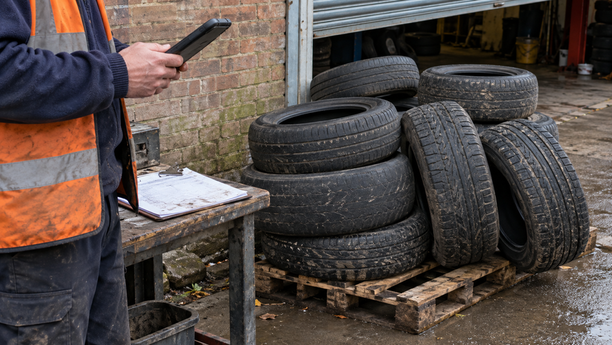
Over the course of its lifetime, the average tyre sheds approximately 4kg of material. That figure may not sound alarming in isolation, but when multiplied across the hundreds of millions of vehicles on European roads, the cumulative environmental impact is considerable. As tyres gradually abrade against road surfaces, microscopic rubber particles (along with chemical compounds used in tyre manufacturing) are released into the surrounding environment.
Unlike exhaust emissions, which are dispersed into the air and have long been subject to strict regulation, tyre wear particles are deposited directly onto road surfaces. From there, rainwater washes them into drains and drainage channels, eventually carrying them into rivers, coastal waters and the open ocean. Studies have identified tyre-derived chemicals in fish, shellfish and even drinking water sources, raising serious questions about both environmental and human health.
Recognising the scale of the problem, the European Union is introducing new measures specifically targeting tyre wear and the particles it generates. The legislation forms part of a broader regulatory push to address so-called "non-exhaust emissions", pollution that arises not from burning fuel, but from the physical wear of vehicle components such as tyres, brake pads and road surfaces.
The regulations are expected to set limits and drive improvements across several areas, including tyre composition, durability standards and testing requirements. The underlying aim is to reduce the volume of material that tyres shed during normal use, thereby limiting the quantity of particles entering the environment.
For tyre manufacturers, the new rules represent both a challenge and an opportunity. Developing compounds that are more durable and less prone to releasing harmful particles will require investment in research and development, but it also opens the door to differentiation in an increasingly environmentally conscious market.
The tyre sector has already been grappling with its environmental footprint in terms of raw material sourcing, end-of-life disposal and the carbon intensity of manufacturing. Tyre wear particles add another dimension to that picture, and one that is considerably harder to address, given that some degree of wear is an unavoidable consequence of how tyres function.
Retailers and fleet operators will also need to keep a close eye on developments. As the legislation evolves, there may be implications for product ranges, supplier relationships and the advice given to customers about tyre choice and maintenance. Correctly inflated tyres, for instance, wear more evenly and shed fewer particles — a simple point, but one that connects everyday tyre care to broader environmental outcomes.
Tyre wear is not a new phenomenon, but its recognition as a significant source of environmental pollution is a relatively recent development. The EU's decision to legislate in this area marks an important shift: an acknowledgement that managing vehicle-related pollution requires looking beyond the exhaust pipe.
For an industry already navigating the transition to electric vehicles, changing consumer expectations and evolving safety standards, the emergence of tyre wear regulation is yet another factor to factor into long-term planning. Those who engage with the issue early (whether through product development, customer education or supply chain decisions) will be best placed when the rules come fully into force.
The 4kg that each tyre quietly loses over its lifetime may seem a small thing. But in an era of heightened environmental scrutiny, even the smallest particles are coming under the microscope.
Tagged with: tyre wear particles, tyre abrasion limits, Euro 7 regulation, non-exhaust emissions, microplastics runoff, TRWP, 6PPD quinone, tyre durability testing, fleet tyre maintenance, tyre compound development, EU type approval, sustainable mobility
Editorial Standards & Disclaimer
Tyre News Media is an independent industry publication. Our reporting is based on information available at the time of publication, including company announcements, regulatory filings, official data, research and other sources considered reliable.
Articles may include independent analysis and editorial interpretation. Where appropriate, company statements and third-party claims are attributed to their source. Analysis, estimates and forward-looking observations should not be read as statements of established fact.
Tyre News Media takes reasonable steps to ensure accuracy but welcomes corrections, clarifications and responses from organisations or individuals covered in our reporting. If you believe information is inaccurate or requires clarification, please contact info@tyrenews.co.uk. Material errors will be corrected as appropriate.
Commercial relationships, advertising and sponsorship do not determine Tyre News Media's editorial coverage or conclusions.


















%20(1).jpeg)