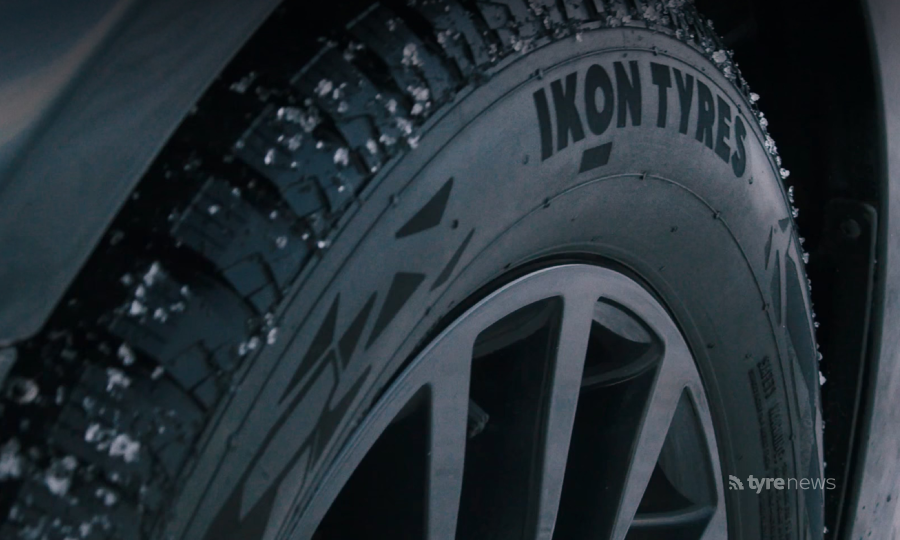

Russia's Ikon Tyres is restructuring its passenger car range around a clearer three-tier architecture, with a new entry-level brand aimed squarely at the lowest-cost Chinese products now dominating the Russian market.
Russia's tyre market shrank in 2025, yet Ikon Tyres grew its market share within it, a performance the company now intends to build on through a substantial portfolio renewal targeting the segment where Chinese imports have made the deepest inroads.
The Russian market now hosts more than 200 Chinese tyre labels, according to industry data cited by Ikon, with Chinese brands accounting for a significant proportion of total imports. That volume has compressed margins and suppressed domestic output in the mass and budget segments. Ikon's response for 2026 is a structured multi-tier offer: premium Ikon-branded products at the top, a mid-range centre, and a new dedicated budget brand manufactured at its Russian facilities, positioned to compete directly on price with the lowest-cost Chinese products available in the market.

The new budget brand is not a rebadge of existing lines. Ikon says it will carry updated tread designs and additional sizes calibrated to Russian climatic and road conditions, as well as those of neighbouring markets. That localisation argument matters commercially: tyre retailers in markets with extreme winter conditions have long questioned whether products designed for milder climates deliver comparable performance, and Ikon is explicitly framing local manufacture as a differentiator rather than simply a cost factor.
The 2025 market share gain was driven in part by Ikon's expansion into fitments compatible with the rising number of Chinese vehicles on Russian roads — a pragmatic response to a shift in the car parc rather than a conventional product cycle move. That same logic underpins the 2026 strategy: adapting range architecture to the vehicle mix and purchasing behaviour of the actual market, rather than defending a legacy portfolio against a structurally different competitive set.
Alongside the budget push, Ikon is investing in new and updated summer, SUV and 4x4 products to protect margins in higher-tier segments. The company describes this as allowing retailers to rationalise supply around fewer, stronger brands — a pitch that will be familiar to wholesalers managing the complexity of a market now fragmented across hundreds of labels. Whether the consolidated offer proves more persuasive than individual Chinese brands competing aggressively on unit price will depend heavily on how clearly Ikon can demonstrate the performance and fitment advantages of locally made product at point of sale.
Ikon expects volume and market share to continue growing as the Russian market stabilises, the company says, supported by the broadened size range and continued investment across all tiers.
For tyre wholesale businesses supplying the Russian and CIS markets, Ikon's strategy signals an important shift: domestic manufacturers are no longer simply defending volume, they are actively tiering their offer to create structured margin opportunities for the trade, from entry-level through to premium. The practical implication is that a retailer or distributor buying from Ikon in 2026 will be offered a single-source "good–better–best" architecture — reducing the administrative and stock management burden of ranging dozens of Chinese labels while retaining a competitive entry-level price point. The degree to which that proposition holds will ultimately rest on whether the new budget brand's pricing genuinely undercuts or matches the Chinese competition, a figure Ikon has not yet disclosed.
Tagged with:Ikon Tyres, Russian tyre market, Chinese tyre imports, budget tyres, tyre portfolio strategy, domestic tyre manufacturing, multi-tier tyre range, tyre market share, CIS tyre market, passenger car tyres, tyre wholesaler, tyre retail
Editorial Standards & Disclaimer
Tyre News Media is an independent industry publication. Our reporting is based on information available at the time of publication, including company announcements, regulatory filings, official data, research and other sources considered reliable.
Articles may include independent analysis and editorial interpretation. Where appropriate, company statements and third-party claims are attributed to their source. Analysis, estimates and forward-looking observations should not be read as statements of established fact.
Tyre News Media takes reasonable steps to ensure accuracy but welcomes corrections, clarifications and responses from organisations or individuals covered in our reporting. If you believe information is inaccurate or requires clarification, please contact info@tyrenews.co.uk. Material errors will be corrected as appropriate.
Commercial relationships, advertising and sponsorship do not determine Tyre News Media's editorial coverage or conclusions.
_0%20(1).png)











.jpeg)
%20(1).jpeg)