
Tyre development has long depended on physical prototypes, track sessions, and iterative testing that stretches timelines and consumes raw materials. Bridgestone's decision to bring driver-in-the-loop (DiL) simulation into its R&D process near Rome represents a measurable shift in how premium tyre makers can compress that cycle, and how quickly they can align with vehicle manufacturers on specifications. For distributors and OE supply chain partners, the technology signals where premium tyre development investment is heading.
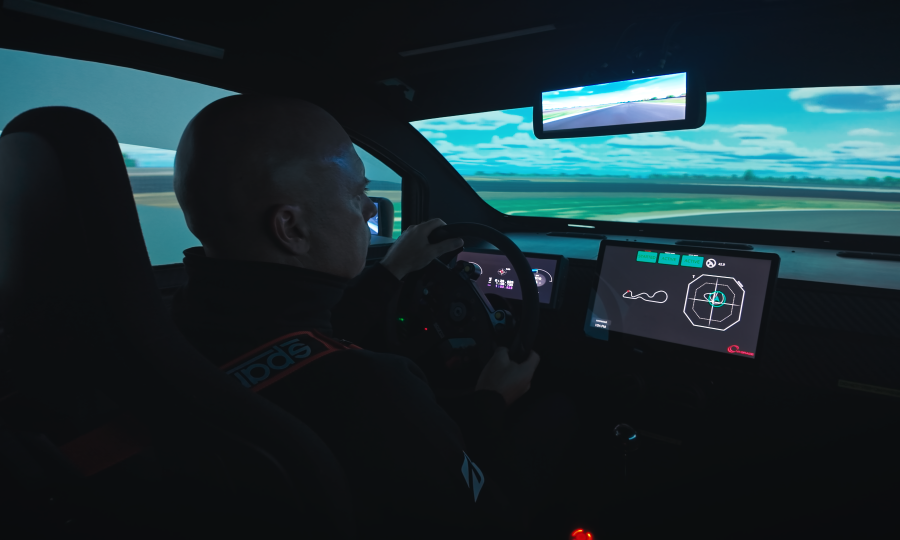
The simulator is a VI-grade DiM500 DiL system. It replicates real-world driving forces through a mobile platform and an immersive cockpit, allowing engineers and test drivers to evaluate tyre performance across a wide range of conditions without building physical prototypes for each iteration.
Bridgestone says it can test more tyre specifications, more quickly, than traditional prototype-heavy programmes allow. The key difference from purely computational simulation is the human element. By placing a driver inside the virtual environment, the company captures subjective handling feedback at earlier design stages before a single prototype tyre is built.
Mattia Giustiniano, R&D Senior Vice President at Bridgestone West, described the investment as a logical extension of the company's existing digital development work: "By integrating the driver into the digital development cycle, this investment adds a crucial new piece to our evolving ecosystem."
In practice, that means handling feel, feedback and driveability preferences no longer have to wait until late-stage track validation. For OE programmes with compressed timelines, particularly in the electric vehicle (EV) segment pulling that input forward can reduce costly late-stage redesigns.
The commercial case is specific. Bridgestone says the simulator is expected to reduce experimental tyre builds by up to 12,000 units per year. It also restates the claim that its Virtual Tyre Development process can cut raw material use and carbon dioxide emissions in the development phase of original equipment (OE) tyres by up to 60%.
Those figures apply to the development phase, not to production or product lifetime. But for R&D operations running parallel programmes across multiple vehicle platforms, the cumulative saving in materials, logistics and testing time is material.
Bridgestone virtual development and Lamborghini OE programme coverage
This builds on broader sustainability-led design investment, including the recycled and renewable-material ENLITEN tyres developed for the 2025 Solar Challenge.
One of the more commercially significant implications is how the simulator supports parallel tyre-and-vehicle development. Bridgestone says it enables faster joint iterations with vehicle manufacturers, a process that has grown more demanding as EV programmes introduce tighter constraints on load capacity, rolling resistance, acoustic performance and handling balance.
In EV fitment programmes, tyre performance targets frequently shift as vehicle weight distribution, powertrain output and suspension tuning evolve. A DiL environment allows tyre engineers to respond to those changes quickly, without triggering a new physical prototype cycle each time.
The company says current simulator use is focused on dry handling performance, with expansion to a broader set of conditions under development.
For OE supply chain and procurement teams, there are two concrete implications here.
First, tyre makers with credible digital development infrastructure are likely to become more competitive in OE tender processes, particularly for EV platforms where development schedules are tight and performance requirements are still evolving. Distributors and purchasing managers aligned with suppliers investing in this capability may see faster product availability and more clearly documented performance data at the point of specification.
Second, the projected reduction in prototype tyre builds has supply chain consequences. Fewer experimental units in circulation means less test material moving through logistics networks and potentially less pressure on the informal channels through which prototype tyres occasionally enter the secondary market. For recyclers and end-of-life tyre (ELT) operators, the longer-term direction of travel is fewer prototype inputs, though the scale of that change will depend on how widely DiL adoption spreads across the sector.
Digital development is becoming a competitive lever across the premium tyre segment. If DiL testing reliably reduces prototype builds and track days, tyre makers can reallocate R&D spend toward materials innovation, noise and wear modelling, and faster OE sign-off. This also supports the sector's wider push for reduced-waste R&D pathways, consistent with the policy direction set by the European Tyre and Rubber Manufacturers' Association (ETRMA) on digital tools and circular economy progress.
Tagged with:Bridgestone, Virtual Tyre Development, driver-in-the-loop, VI-grade DiM500, tyre R&D, digital tyre development, tyre prototypes, OEM co-development, sustainability, Rome R&D centre, simulation, ETRMA, ELT, ENLITEN, EV tyres
Editorial Standards & Disclaimer
Tyre News Media is an independent industry publication. Our reporting is based on information available at the time of publication, including company announcements, regulatory filings, official data, research and other sources considered reliable.
Articles may include independent analysis and editorial interpretation. Where appropriate, company statements and third-party claims are attributed to their source. Analysis, estimates and forward-looking observations should not be read as statements of established fact.
Tyre News Media takes reasonable steps to ensure accuracy but welcomes corrections, clarifications and responses from organisations or individuals covered in our reporting. If you believe information is inaccurate or requires clarification, please contact info@tyrenews.co.uk. Material errors will be corrected as appropriate.
Commercial relationships, advertising and sponsorship do not determine Tyre News Media's editorial coverage or conclusions.














%20(1).png)


%20(1).jpeg)
%20(1).png)
%20(1).jpeg)