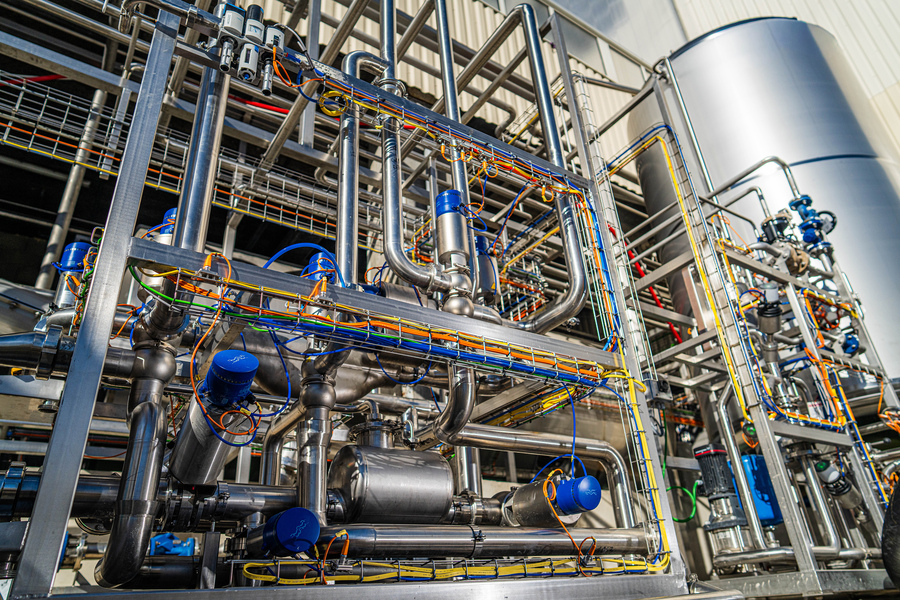
Michelin, long known for its tyre manufacturing heritage, is reinforcing its software-led business model by partnering with Thales to protect and monetise its growing portfolio of tyre simulation software. The collaboration uses the Thales Sentinel Software Monetization Platform to support global licensing, safeguard intellectual property, and enable flexible deployment models across Michelin’s advanced simulation tools.
As tyre development evolves beyond physical testing, Michelin is increasingly offering simulation software for OEMs and motorsports teams. Products like TameTire, Canopy, and SiMiX simulate tyre performance, predict handling characteristics, and optimise vehicle setups — all based on advanced algorithms and real-world tyre physics.
TameTire, for example, allows engineers to simulate tyre behaviour under varying loads, forces and thermal conditions. Canopy focuses on vehicle modelling and laptime simulation via the cloud, while SiMiX provides automotive stakeholders with datasets for critical vehicle components.
These tools support faster development cycles, cost-effective testing, and performance gains — key priorities in both the automotive and motorsports sectors.
To protect its proprietary software and streamline delivery, Michelin has implemented Thales Sentinel, a unified licensing platform compatible with on-premise, hybrid and cloud deployments. Sentinel provides robust IP protection and supports flexible subscription-based licensing models.
This approach has helped Michelin manage software access efficiently, reduce the risk of piracy, and drive new revenue streams — while freeing internal teams to focus on R&D and product innovation.
Thales and Michelin report improved operational efficiency and scalable software delivery through this collaboration.
Michelin’s adoption of a secure, cloud-enabled licensing system highlights a growing trend: traditional manufacturers expanding into software-defined vehicle ecosystems. For the tyre sector, simulation tools are not only enhancing OEM collaboration but also enabling faster EV and motorsports development without reliance on physical test cycles. The shift also aligns with broader industry goals around cost reduction, virtual validation, and connected vehicle integration.
Editorial Standards & Disclaimer
Tyre News Media is an independent industry publication. Our reporting is based on information available at the time of publication, including company announcements, regulatory filings, official data, research and other sources considered reliable.
Articles may include independent analysis and editorial interpretation. Where appropriate, company statements and third-party claims are attributed to their source. Analysis, estimates and forward-looking observations should not be read as statements of established fact.
Tyre News Media takes reasonable steps to ensure accuracy but welcomes corrections, clarifications and responses from organisations or individuals covered in our reporting. If you believe information is inaccurate or requires clarification, please contact info@tyrenews.co.uk. Material errors will be corrected as appropriate.
Commercial relationships, advertising and sponsorship do not determine Tyre News Media's editorial coverage or conclusions.













%20(1).jpeg)
%20(1).png)


%20(1).jpeg)