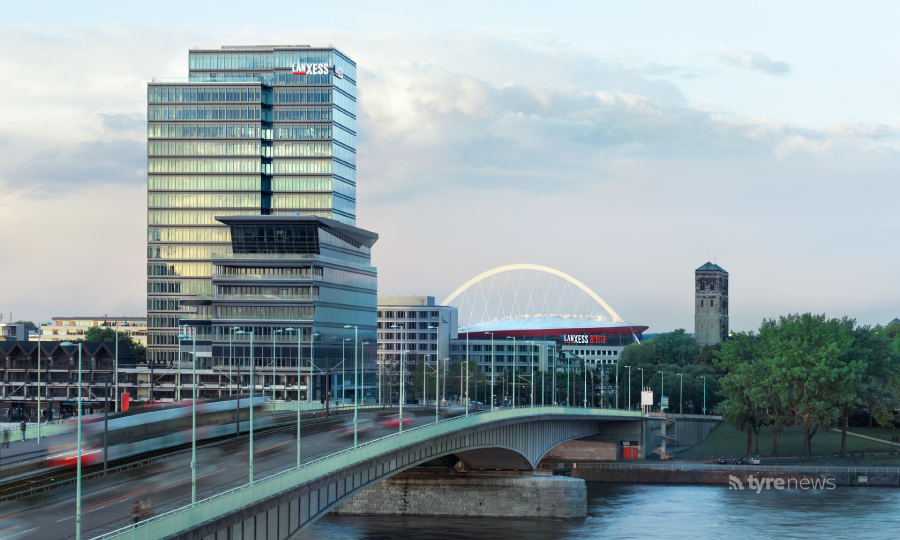

Specialty chemicals group Lanxess AG has announced an immediate price increase of between 15 and 50 per cent across its range of functional additives used in tyre manufacturing and specialty rubber applications. The hike, effective without notice period, signals the growing financial pressure being felt throughout the tyre supply chain.
Lanxess is among the most significant additive suppliers to the global tyre industry. Through its Rhein Chemie business unit, the Cologne-based group supplies a comprehensive portfolio of rubber processing chemicals, including vulcanising agents, processing accelerators, antidegradants, anti-reversion agents, and release agents. These materials are not peripheral inputs; they are fundamental to achieving the tyre performance characteristics that both regulators and consumers demand, including durability, wet grip, ageing resistance and compound consistency.
Without these additives, tyre manufacturers cannot meet the technical and safety benchmarks required for product approval. That essential role makes demand for Lanxess products largely inelastic, meaning that tyre makers have limited scope to substitute away from them in the short term.
The scale of the increase, spanning 15 to 50 per cent depending on the product, is therefore a significant cost event for any manufacturer with meaningful European procurement exposure.
Lanxess cites a combination of structural and cyclical pressures as the basis for the adjustment. Energy costs have risen substantially across its European manufacturing base, where electricity and gas-intensive chemical production processes make the company acutely sensitive to utility price volatility. Critical raw material shortages, particularly for petrochemical precursors, have further compressed margins. Logistics disruptions, many of which remain unresolved following the turbulence of recent years, continue to add friction and cost to supply chains. Geopolitical tensions have compounded all three factors, limiting access to certain input markets and increasing freight and insurance costs.
The company has stated that these pressures are unavoidable and cannot be absorbed indefinitely within its cost base.
The timing is difficult for tyre manufacturers. The sector is simultaneously navigating elevated natural rubber prices, growing regulatory requirements around sustainable materials and tyre wear particle emissions, and investment demands arising from the transition to electric vehicles. Each of these trends requires product reformulation or process investment, at a point when chemical input costs are now rising sharply as well.
Industry analysts have consistently noted that cost pressures of this nature tend to flow through the value chain in one of two ways: either via higher ex-factory tyre prices, or via compressed margins for manufacturers unable to pass on costs to customers locked into longer-term contracts. In competitive markets with strong private-label or lower-cost import pressure, the latter outcome is a real risk, particularly for European producers.
For UK tyre manufacturers and the distributors who rely on European-sourced product, the implications are worth monitoring closely. The British Tyre Manufacturers' Association has already flagged the cumulative burden of compliance costs associated with deforestation due diligence rules and sustainability mandates, and this latest input cost shock adds to that picture.
Despite the price action, Lanxess has been notably active on the innovation front. In the days preceding this announcement, the company presented new high-performance additive solutions at Tire Technology Expo 2026 in Hanover, reinforcing its position at the forefront of sustainable tyre chemistry. These presentations included advances in silica dispersion aids, aromatic-free accelerator systems, and sustainable variants of established antidegradants certified under the ISCC Plus framework.
The company's Rhein Chemie unit has also developed release agents and processing aids specifically designed to reduce waste and energy consumption during tyre production, under the banner of its "Less is more" philosophy, which promotes efficient resource use rather than volume-driven chemistry.
In its price notification, Lanxess stated that it remains committed to supporting tyre customers with high-quality, innovative solutions, while being clear that unavoidable cost increases must be shared with the supply chain.
This price increase does not occur in isolation. As Tyre News has reported, natural rubber prices reached new highs in late 2024 and synthetic rubber costs have continued to climb into 2025. US trade tariffs, anti-dumping investigations and shifting logistics patterns are adding further complexity for globally integrated tyre manufacturers. Against this backdrop, a significant additive price increase from one of the sector's most critical chemistry suppliers reinforces the view that cost management will remain a defining challenge for tyre manufacturers throughout 2025 and beyond.
Tyre News Media will continue to monitor the impact of this development across UK and European tyre manufacturing.
Tagged with: Lanxess, Rhein Chemie, rubber additives, tyre manufacturing costs, specialty chemicals, supply chain inflation, tyre compound additives, sustainable tyre production, functional additives, energy cost pressures, tyre industry supply chain, ISCC Plus
Editorial Standards & Disclaimer
Tyre News Media is an independent industry publication. Our reporting is based on information available at the time of publication, including company announcements, regulatory filings, official data, research and other sources considered reliable.
Articles may include independent analysis and editorial interpretation. Where appropriate, company statements and third-party claims are attributed to their source. Analysis, estimates and forward-looking observations should not be read as statements of established fact.
Tyre News Media takes reasonable steps to ensure accuracy but welcomes corrections, clarifications and responses from organisations or individuals covered in our reporting. If you believe information is inaccurate or requires clarification, please contact info@tyrenews.co.uk. Material errors will be corrected as appropriate.
Commercial relationships, advertising and sponsorship do not determine Tyre News Media's editorial coverage or conclusions.














%20(1)%20(1).png)