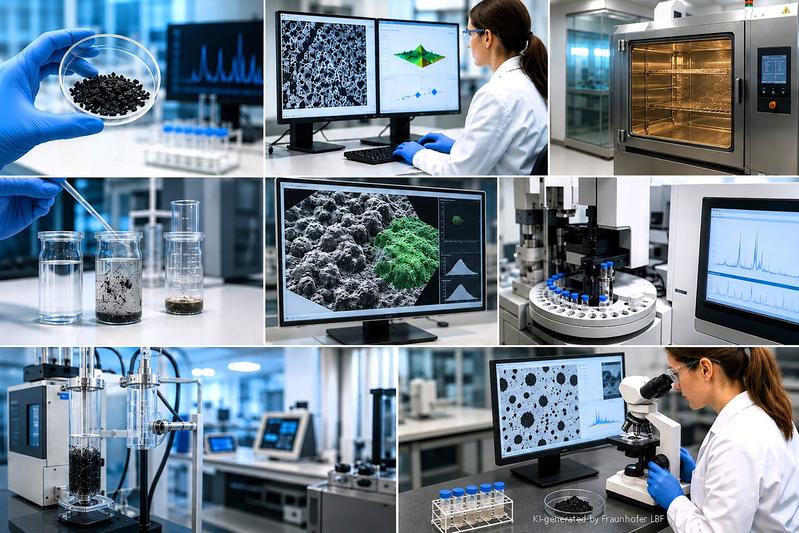

Fraunhofer researchers have developed laboratory methods to generate, collect and analyse tyre abrasion under controlled conditions.
A consortium of four Fraunhofer institutes has completed the first phase of a research programme intended to make tyre abrasion reproducible and predictable at laboratory scale.
The Technology Platform for Tire Abrasion and the Identification of Its Emissions in Road Traffic, known as TERIS, brings together the Fraunhofer institutes LBF, ICT, IGD and IWM. Fraunhofer LBF is leading the project.
Researchers have developed initial methods covering reference abrasion, particle collection and analysis, tribological modelling, artificial intelligence-based surface inspection, accelerated ageing and volatile organic compound detection.
The project addresses an important development challenge for tyre manufacturers. Regulatory measurements generally assess complete tyres. However, compound developers need faster methods to examine material, loading and ageing effects before full-scale testing.
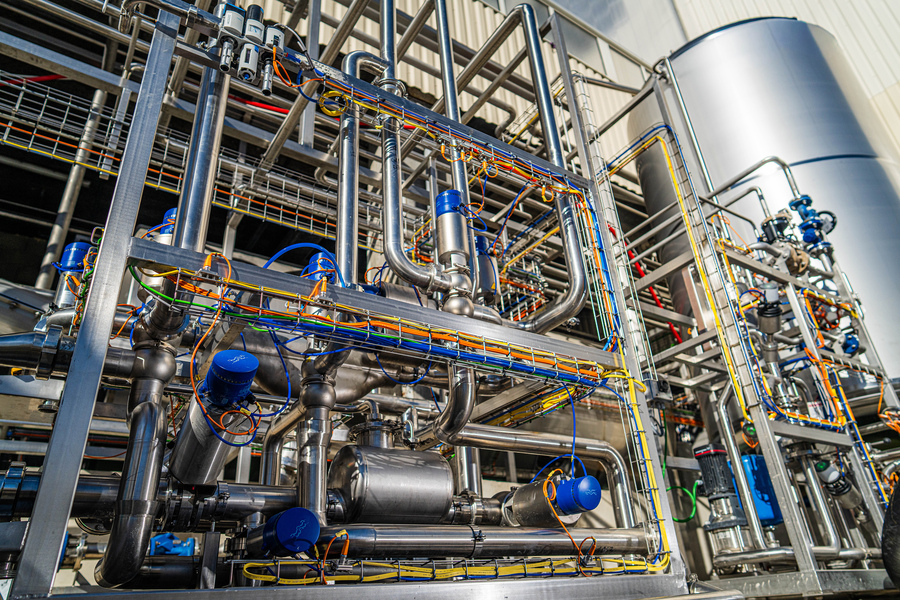
TERIS combines several collection and measurement techniques to analyse airborne particles and material settling during an abrasion test.
The need for more consistent sampling has become an important industry issue. A recent Tyre News review of tyre-wear emissions research found that differences in collection, detection and characterisation methods continue to limit comparisons between studies.
Researchers have also created experimental and theoretical tribological models examining how load, material properties and surface structure influence particle formation. The intention is to reproduce relevant abrasion mechanisms under controlled conditions rather than relying solely on lengthy vehicle or complete-tyre trials.
The work follows wider industry research into particle collection. Tyre News previously reported on Bridgestone’s vehicle-based method for collecting tyre and road-wear particles, which uses optical technology to observe particle dispersion under controlled driving conditions.
A proposed TERIS test bench would generate rubber abrasion under multiaxial loading while integrating particle measurement and optical sensing within the same laboratory system.
The consortium said this approach could eventually allow new rubber compounds to be compared earlier in the development process.
Fraunhofer IGD has developed an optical inspection system using artificial intelligence to identify and classify surface structures.
The system has initially been validated using substitute materials. Testing on rubber samples is planned during the next phase of the project.
Surface analysis could help researchers connect visible material changes with measured particle generation and operating conditions. Used alongside tribological models, it may provide a more detailed explanation of why particular compounds or test conditions produce different wear behaviour.
Predictive modelling is also developing elsewhere in the sector. Yokohama Rubber’s theoretical model for predicting rubber wear examines wear rates and particle-size distribution across uneven surfaces.
The project is also examining how environmental ageing changes abrasion performance.
A dedicated chamber can precondition samples under controlled environmental stresses before testing. This allows researchers to study whether weathering alters wear rates, particle characteristics or other material behaviour.
Chemical analysis is being used to identify volatile organic compounds associated with tyre abrasion. Combining VOC measurements with particle characterisation broadens the platform beyond mass-loss testing. It could support a more complete assessment of emissions from different rubber formulations.
Compound developers must also balance abrasion with grip, rolling resistance, durability and material sustainability. Recent Tyre News coverage of Continental’s use of circular resins and alternative rubber feedstocks illustrates how material changes must retain established performance characteristics.
The timing is significant as tyre abrasion moves into the European regulatory framework.
Regulation (EU) 2024/1257 introduces Euro 7 requirements covering non-exhaust emissions, including tyre abrasion, across vehicle categories. The regulatory framework refers to tyre-level measurement procedures, while detailed limits and implementation differ by tyre class and application.
European Commission Joint Research Centre work states that passenger-car tyre-abrasion limits are scheduled to apply from 2028, followed by light-commercial-vehicle tyres from 2030. The procedures are based on testing approaches developed through UNECE, including on-road convoy and laboratory drum methods.
TERIS does not replace those regulatory tests. Its potential value lies earlier in development, where a repeatable laboratory method could help manufacturers screen compounds, investigate wear mechanisms and reduce costly full-tyre iterations.
That distinction will be important. A useful development platform must demonstrate that results from rubber samples and laboratory contact conditions correlate with finished-tyre behaviour under representative use.
Fraunhofer said the next stage will apply the optical technology to real rubber materials. Researchers will also continue integrating the project’s abrasion, particle and chemical-analysis methods.
The consortium announced the first-stage milestone on 7 July 2026.
Reliable correlations between compound-scale tests and tyre-level abrasion could give manufacturers a faster route for comparing materials. The system could also support the industry’s wider shift towards measurable non-exhaust emissions.
Tyre abrasion is becoming a more prominent research and regulatory issue because wear particles can enter air, soil and water.
The European Commission’s Joint Research Centre has estimated that tyre wear represents between one-third and one-half of unintentionally released microplastics. Reported emission levels vary substantially according to the tyre, vehicle, road, environment and driving conditions.
For tyre developers, the challenge is therefore not simply to reduce mass loss. Future assessment is likely to require a clearer understanding of particle size, composition, chemical emissions and ageing.
Manufacturers must also consider the trade-offs between abrasion, safety and other performance characteristics.
TERIS is relevant because it attempts to bring several of those measurements into one controlled development platform.
Tagged with: Fraunhofer, TERIS project, tyre abrasion, tyre wear particles, Euro 7, rubber compounds, laboratory tyre testing, tribology, artificial intelligence, VOC emissions, non-exhaust emissions, tyre emissions
Editorial Standards & Disclaimer
Tyre News Media is an independent industry publication. Our reporting is based on information available at the time of publication, including company announcements, regulatory filings, official data, research and other sources considered reliable.
Articles may include independent analysis and editorial interpretation. Where appropriate, company statements and third-party claims are attributed to their source. Analysis, estimates and forward-looking observations should not be read as statements of established fact.
Tyre News Media takes reasonable steps to ensure accuracy but welcomes corrections, clarifications and responses from organisations or individuals covered in our reporting. If you believe information is inaccurate or requires clarification, please contact info@tyrenews.co.uk. Material errors will be corrected as appropriate.
Commercial relationships, advertising and sponsorship do not determine Tyre News Media's editorial coverage or conclusions.














%20(1).png)



%20(1).jpeg)
%20(1).png)