.jpg)

Michelin has added 19 electric vans to its UK Connected Solutions fleet, taking battery-electric vehicles to almost two-thirds of its operational total. The deployment combines vehicle replacement with telematics, driver coaching and efficiency-focused tyre selection as the company works towards fully electrifying the division’s fleet by 2030.
The latest vehicles comprise three Ford E-Transit Custom vans and 16 Ford E-Transit Courier models. They replace diesel vehicles used by customer support teams serving passenger transport operators.
Following the additions, 36 of the division’s 56 operational vehicles are electric. Michelin plans to replace the remaining combustion-powered vehicles gradually before the end of the decade.
The figures make the announcement more than a routine fleet purchase. They provide an operational example of how a tyre and mobility business is managing its own transition to electric light commercial vehicles.
.jpg)
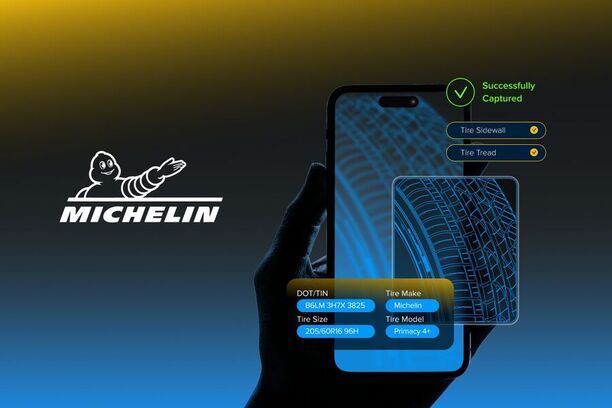
Every new van uses MICHELIN Connected Fleet telematics to monitor driving behaviour, vehicle utilisation and energy efficiency.
An in-cab light bar gives drivers immediate feedback intended to encourage smoother acceleration and braking. Forward-facing and rear-facing cameras also support incident investigation and driver protection.
Andrew French, B2B Sales Director at Michelin UK and Ireland, said the company had used telematics to support its sustainability and fleet management objectives for several years.
Michelin says the replacement of diesel vehicles could reduce annual fleet emissions by approximately 79.5 tonnes of carbon dioxide. The figure is based on the company’s operating assumptions and expected vehicle usage.
The deployment follows wider investment in Michelin’s connected services. Tyre News recently examined the company’s AI-enabled fleet management tools at RTX 2026, including systems intended to improve maintenance and operational decisions.
The vans use either MICHELIN Agilis 3 or MICHELIN Agilis CrossClimate tyres, depending on their operating requirements.
Agilis 3 tyres are designed to limit rolling resistance, which can help reduce energy consumption and protect electric driving range. Agilis CrossClimate tyres provide an all-season option for vehicles working across varied weather and road conditions.
Michelin’s claims should be viewed alongside each fleet’s routes, loads and driving patterns. However, tyre efficiency has become increasingly relevant as operators examine every factor affecting electric van range and total cost.
A recent British Gas fleet renewal provides further context. The operator selected Agilis CrossClimate tyres for 2,500 new vans, including vehicles within its growing battery-electric fleet.
Drivers completed dedicated electric vehicle familiarisation training before receiving the vans. The programme covered charging procedures, vehicle operation and techniques for extending usable range.
The vehicles also form part of Michelin’s EcoStar incentive programme. It uses Connected Fleet data to recognise safer and more efficient driving.
In practice, this combines three elements that affect electric fleet performance: the vehicle, its tyres and how it is driven. Telematics provides the evidence needed to identify where efficiency is being gained or lost.
Commercial fleet electrification is increasingly becoming a wider operational change rather than a direct diesel-for-electric substitution.
Charging access, route suitability, driver behaviour, vehicle utilisation and tyre performance can all affect whether an electric van delivers the expected financial and environmental results.
Michelin’s deployment indicates how connected fleet management can support that process. It also gives tyre dealers and fleet service providers a clearer role in electrification through tyre selection, maintenance data and efficiency advice.
Tagged with: Michelin, MICHELIN Connected Fleet, electric vans, EV fleet transition, fleet telematics, Ford E-Transit Custom, Ford E-Transit Courier, commercial vehicle tyres, low rolling resistance tyres, driver efficiency, fleet electrification, sustainable fleet management
Editorial Standards & Disclaimer
Tyre News Media is an independent industry publication. Our reporting is based on information available at the time of publication, including company announcements, regulatory filings, official data, research and other sources considered reliable.
Articles may include independent analysis and editorial interpretation. Where appropriate, company statements and third-party claims are attributed to their source. Analysis, estimates and forward-looking observations should not be read as statements of established fact.
Tyre News Media takes reasonable steps to ensure accuracy but welcomes corrections, clarifications and responses from organisations or individuals covered in our reporting. If you believe information is inaccurate or requires clarification, please contact info@tyrenews.co.uk. Material errors will be corrected as appropriate.
Commercial relationships, advertising and sponsorship do not determine Tyre News Media's editorial coverage or conclusions.



















%20(1).jpeg)