


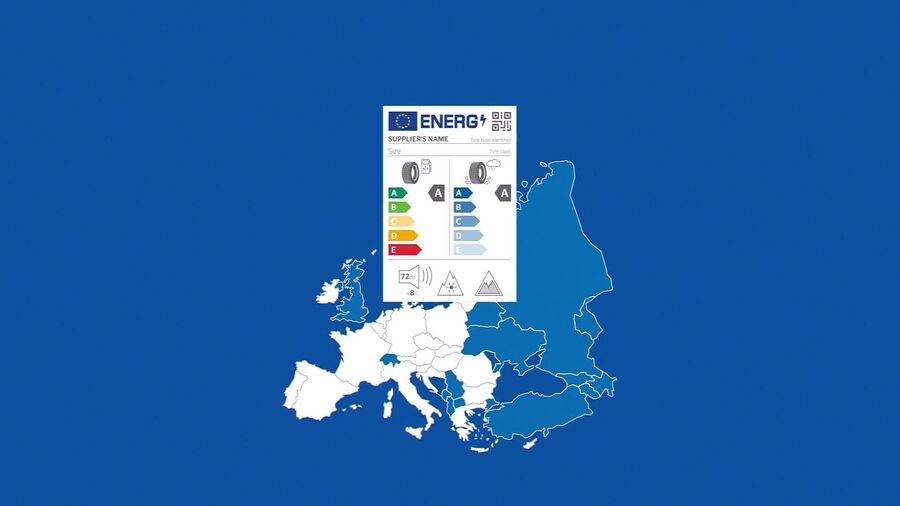

The European Commission has proposed changes to EU energy and tyre labelling rules aimed at keeping product information clear, comparable and easier to access. For the tyre sector, the proposal could simplify label updates, expand digital formats and improve use of EPREL by procurement teams and market surveillance authorities.
The proposal, published on 24 June 2026, would amend Regulation (EU) 2017/1369 on energy labelling and Regulation (EU) 2020/740 on tyre labelling. The Commission says the aim is to simplify rules for suppliers and dealers while preserving the label’s core role in helping customers compare products before purchase.
In practice, that means greater flexibility over how labels are shown. The package allows wider use of digital formats, including electronic displays, QR codes and label information shown at the point of an installer’s offer. The Commission’s proposal says the framework should continue to provide “harmonised and comparable information” while making better use of the digital ecosystem created by EPREL.
For tyre manufacturers and importers, the most important change is the proposed simplification of the legal process for updating labels. That matters because performance classes, QR codes and product data are now part of day-to-day compliance, not just consumer marketing.
The Commission also wants clearer responsibilities for representatives of non-EU manufacturers. That will be watched closely by importers, wholesalers and online sellers handling products from outside the European Union.
Tyre News has recently covered the importance of label credibility, including ETRMA analysis of EU tyre label progress and remaining gaps. It has also reported on EU tyre labelling enforcement risks for UK wholesalers, where incomplete documentation can create cross-border exposure.
EPREL is already central to tyre labelling, with tyre suppliers entering data on rolling resistance, wet grip and other environmental aspects. The Commission wants better digital access to that data for public procurement and market surveillance.
That could make the database more useful beyond the retail transaction. Procurement teams could check product eligibility more easily, while enforcement bodies could compare label claims against registered data more efficiently.
The Commission says EPREL contains more than two million model entries across energy-related products and tyres. It also says QR codes can unlock more detailed information for dealers, distributors, customers and end users.
One tyre-specific change would remove the requirement for vehicle dealers to display tyre labels when selling a new car, where customers are rarely offered a choice of tyres.
That provision reflects how new-car sales work in practice. In many cases, tyre choice is determined by the vehicle manufacturer or supply chain rather than the buyer. For the tyre industry, the question is whether removing a low-value display requirement reduces administrative burden without weakening transparency where consumers do make tyre choices.
Tyres Europe has warned policymakers that simplification must not create new layers of complexity for manufacturers, retailers or consumers. That is the central tension in the proposal: the Commission wants clearer, more digital information, but the sector will want consistent rules that are workable at factory, warehouse, retail and installer level.
The proposal does not change the overall purpose of tyre labelling. EU tyre labels still provide information on fuel efficiency, wet grip and external noise, with additional snow and ice indicators where relevant. The Commission says the tyre labelling regulation has helped reduce energy consumption and CO2 emissions since its introduction.
The commercial impact will depend on the final legislative text. If adopted cleanly, the changes could reduce duplication and make label data easier to verify. If the process adds inconsistent digital and physical requirements, it could increase compliance work for the same businesses it aims to help.
Tagged with: EU tyre labelling, tyre labels, EPREL, digital tyre labels, QR codes, tyre compliance, tyre regulation, tyre retailers, tyre wholesalers, market surveillance, Tyres Europe, EU tyre rules
Editorial Standards & Disclaimer
Tyre News Media is an independent industry publication. Our reporting is based on information available at the time of publication, including company announcements, regulatory filings, official data, research and other sources considered reliable.
Articles may include independent analysis and editorial interpretation. Where appropriate, company statements and third-party claims are attributed to their source. Analysis, estimates and forward-looking observations should not be read as statements of established fact.
Tyre News Media takes reasonable steps to ensure accuracy but welcomes corrections, clarifications and responses from organisations or individuals covered in our reporting. If you believe information is inaccurate or requires clarification, please contact info@tyrenews.co.uk. Material errors will be corrected as appropriate.
Commercial relationships, advertising and sponsorship do not determine Tyre News Media's editorial coverage or conclusions.


















%20(1).jpeg)
