
German tyre production fell 9.1% year-on-year to 200,000 tonnes in the first half of 2026, a substantially steeper decline than German passenger-car manufacturing. The contraction also came as European replacement tyre sales returned to growth, highlighting different conditions for Germany-based production and the wider market.
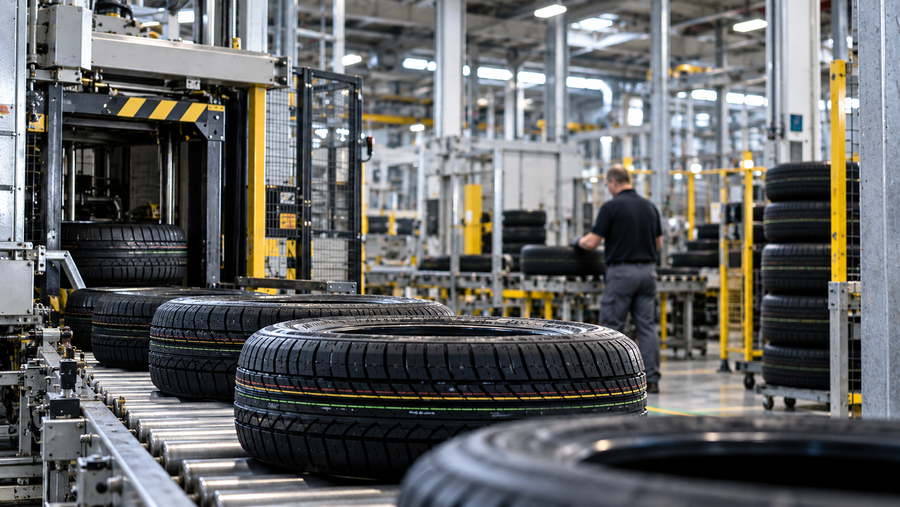
German tyre manufacturers produced 200,000 tonnes during the first half of 2026, down 9.1% from the same period a year earlier, according to new figures from the German Rubber Industry Association, wdk.
The decline was considerably greater than elsewhere in Germany's rubber industry. Production of technical rubber goods fell 2.9% to 330,000 tonnes, leaving total rubber-industry output 5.4% lower at 530,000 tonnes. Tyre-sector employment also declined 8.3% to 16,500.
Revenue data show similarly pronounced weakness in tyres. First-half tyre sales fell 7.9% to €1.76 billion, compared with a 2.0% decline for technical rubber goods.
Within tyres, German-market revenue decreased 7.1% to €1.30 billion, while foreign revenue fell more sharply, by 9.8% to €460 million.
The tyre figures were notably weaker than German passenger-car production over the same period.
German plants assembled 2.109 million passenger cars during the first six months, 3% fewer than a year earlier, according to the VDA. Exports of German-built cars were also down 3%, while domestic new-car registrations increased 6% to 1.484 million vehicles.
The comparison does not imply that tyre and vehicle production should move together. The VDA figures principally measure passenger cars assembled in Germany, whereas wdk records tyre output from German manufacturing operations serving a wider mix of original equipment, replacement and export markets.
However, the difference means the 9.1% tyre-production decline cannot be explained simply by the reduction in German passenger-car assembly.
That becomes clearer when the wider European replacement market is considered.
Tyres Europe reported first-half replacement sales among its members up 2% for consumer tyres and 7% for truck and bus tyres. Within consumer tyres, all-season volumes increased 9%, while summer tyres fell 2% and winter tyres declined 5%.
Growing European replacement demand does not necessarily translate into increased German production. Tyres sold across Europe can be manufactured in Germany, elsewhere in Europe or outside the region.
Tyres Europe also reported a rebound in imports during the second quarter after sharp declines in Q1, with truck tyre imports rising strongly in both quarters. The figures do not establish the effect on individual German factories, but they underline why European replacement-market growth and declining German production can occur simultaneously.
Germany's broader export environment also weakened in several important markets during the period.
Total German exports to China fell 12.3% year-on-year during the first half, while exports to the US declined 5.8%. German exports of vehicles and vehicle parts to China were down 26.1% during January to May, while equivalent exports to the US fell 28.4% in the first quarter. These are automotive rather than tyre-specific statistics and do not establish what happened to German tyre exports directly.
Wdk has attributed pressure on German rubber manufacturers more broadly to energy costs, bureaucracy and increasing competition from producers outside Europe. Those are the association's assessment of the industry's operating environment rather than a quantified explanation of the first-half tyre-production decline.
The available figures nevertheless show that tyres underperformed the rest of German rubber manufacturing during the first half, while tyre revenues weakened in both domestic and overseas markets. They do not determine how much of the production decline resulted from export demand, imports, manufacturing-location decisions, product mix or other factors.
Tags: German tyre production, Germany tyre industry, wdk, European tyre market, replacement tyres, tyre manufacturing, German automotive production, tyre imports, tyre sales, rubber industry, Tyres Europe
Editorial Standards & Disclaimer
Tyre News Media is an independent industry publication. Our reporting is based on information available at the time of publication, including company announcements, regulatory filings, official data, research and other sources considered reliable.
Articles may include independent analysis and editorial interpretation. Where appropriate, company statements and third-party claims are attributed to their source. Analysis, estimates and forward-looking observations should not be read as statements of established fact.
Tyre News Media takes reasonable steps to ensure accuracy but welcomes corrections, clarifications and responses from organisations or individuals covered in our reporting. If you believe information is inaccurate or requires clarification, please contact info@tyrenews.co.uk. Material errors will be corrected as appropriate.
Commercial relationships, advertising and sponsorship do not determine Tyre News Media's editorial coverage or conclusions.


_0%20(1).png)













%20(1).jpeg)