
Tyre technology moved further beyond conventional product development during the week ending 16 August 2026.
Research into alternatives to 6PPD exposed a substantial future compounding challenge, Pirelli pushed connected tyres into unmanned vehicles, Linglong joined the industry's tyre-data standardisation effort and Britain's growing used-EV parc brought electrification firmly into the replacement aftermarket.
The common thread running through this week's developments is complexity. Tyres are increasingly being asked not only to provide grip, durability and efficiency, but also to satisfy emerging environmental requirements, communicate reliable data and work more closely with the electronic systems around the vehicle.
For manufacturers, that expands the development problem. For fleets and the aftermarket, it changes what information and technical capability will be needed to select, monitor and service tyres.
One of the clearest examples comes from the industry's search for an alternative to 6PPD, the antidegradant used to protect rubber against deterioration caused by ozone, oxygen, heat and repeated flexing.
The work is moving beyond the seven candidates identified during preliminary analysis in California. The U.S. Tire Manufacturers Association's 6PPD Alternatives Analysis Consortium is assessing a broader working set as additional toxicity, performance and supplier information becomes available, while its Stage 2 Alternatives Analysis report is now due to California's Department of Toxic Substances Control in October 2029.
That longer timetable should not be mistaken for the problem becoming easier.
A promising replacement chemistry would still need to be incorporated into different compound families and validated across passenger, commercial and specialist tyre applications. Manufacturing processes, raw-material supply, OE approvals and ultimately complete-tyre performance could all be affected.
The commercial challenge could extend upstream. Any successful substitute would need sufficient industrial capacity, consistent quality and potentially multiple qualified suppliers before manufacturers could confidently deploy it across global production.
California could therefore influence tyre design well beyond the state itself. Maintaining separate formulations for individual markets would add manufacturing, inventory and traceability complexity, giving manufacturers an incentive to consider wider adoption if a technically and commercially credible alternative emerges.
Read more about the tyre industry's expanding search for 6PPD alternatives.
While tyre chemistry faces greater regulatory scrutiny, connected tyre technology is expanding the role of the tyre inside the vehicle.
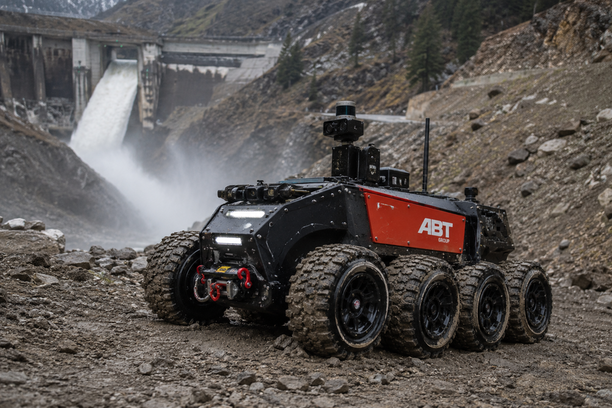
Pirelli and Abet Group have agreed to develop tyre, sensing and artificial-intelligence technology for remotely controlled electric unmanned ground vehicles intended for rescue and other demanding environments.
The significance is not the size of the immediate market. Rescue UGVs remain a specialist application. More important is the proposed role of tyre information within the vehicle's control architecture.
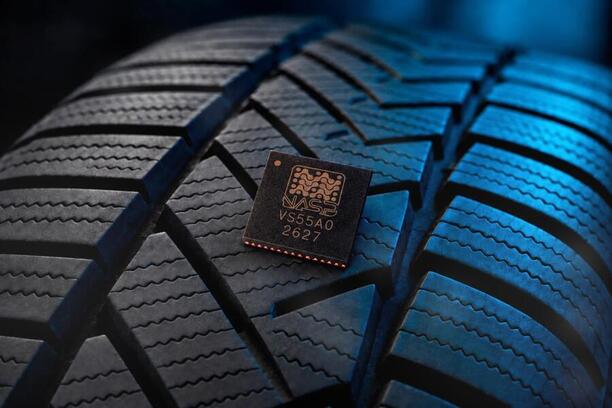
Pirelli's Cyber Tyre technology can collect information from the tyre and communicate it to vehicle electronics. Under the Abet programme, that information is intended to be combined with cameras, optical sensors and other vehicle data, with AI and machine-learning models potentially helping the machine respond to terrain and available grip.
That takes the connected tyre beyond monitoring its own condition. The tyre starts to become another source of environmental information for the vehicle.
The application is particularly relevant for unmanned machinery because a remotely operated vehicle cannot rely on a driver physically sensing changes in traction and behaviour. If tyre-derived information can improve control in those conditions, similar principles could eventually have relevance in mining, industrial and other autonomous off-highway operations.
Read more about Pirelli and Abet's connected tyre programme for rescue UGVs.
Connected technology only becomes more useful across the wider industry if tyre information can move reliably between different systems.
Linglong Tire's decision to join the Global Data Service Organisation for Tyres and Automotive Components as a Full Member is therefore more significant than another industry association membership. Linglong becomes the first Chinese tyre manufacturer to participate at that level.
GDSO is working to establish common structures for tyre data that can be used across manufacturers, fleets, dealers, vehicle manufacturers, service businesses and eventually end-of-life operations.
That interoperability becomes increasingly important as digital tyre identification expands. Fleets operating products from multiple manufacturers have limited benefit from digitalisation if every brand requires a separate proprietary data environment.
Chinese manufacturers are also an increasingly important part of global tyre supply and OE development. Their participation in common data structures could therefore help determine whether digital tyre identification develops as genuinely international infrastructure or as a collection of regional and manufacturer-specific systems.
For Linglong, the move also fits its wider European development, manufacturing and OE ambitions. Product performance and price remain fundamental, but the ability to provide reliable digital product information and connect with customers' systems is becoming another part of the supplier proposition.
Read more about Linglong becoming GDSO's first Chinese Full Member.
Some of these changes can appear distant from everyday replacement tyre operations. Britain's developing used-EV market shows why that distinction is disappearing.
SMMT figures cited by Tyre News Media show that 86,943 used battery-electric vehicles changed hands during the first quarter of 2026, 32% more than a year earlier. Three-to-five-year-old EVs are also moving quickly through the used market.
That age profile matters to tyre businesses because the first significant generation of electric vehicles is moving beyond initial ownership and deeper into the independent aftermarket.
The opportunity is broader than selling an "EV tyre". Retailers need accurate vehicle-specific fitment information covering requirements such as load index and construction, while alignment and suspension inspection can become increasingly relevant as vehicles accumulate mileage.
There is also a skills dimension. Workshops carrying out tyre and chassis work need sufficient EV awareness to understand lifting requirements, high-voltage risks and when conventional mechanical work intersects with ADAS or electrified vehicle systems.
Investment therefore needs to follow the work a business actually intends to capture. For a tyre-led operation, fitment data, alignment capability, suitable lifting equipment and technician competence may provide a more immediate return than advanced battery diagnostic equipment.
Read more about how ageing EVs are reshaping the tyre aftermarket.
Electrification is influencing the businesses supporting those vehicles as well.
Autogem has expanded the solar installation at its London headquarters to a stated 128kWp as electricity demand rises alongside the electrification of its company fleet. The company expects the installation to provide around 51% of annual electricity requirements, although actual generation will depend on operating conditions and consumption.
The wider lesson is that fleet electrification cannot always be treated independently from premises and energy strategy.
Moving company vehicles away from internal combustion transfers more transport energy demand onto the electricity supply. For businesses with appropriate sites, charging capacity, electricity tariffs, on-site generation and vehicle replacement can therefore become connected investment decisions rather than separate sustainability projects.
Read more about Autogem's solar expansion alongside fleet electrification.
The tyre industry's future is increasingly being shaped by systems surrounding the physical product.
A compound ingredient can create a multi-year regulatory and supply-chain programme. A sensor can turn the tyre into an input for vehicle control. Standardised identification can allow product information to move between manufacturers, fleets and service providers, while electrification changes both the vehicles entering tyre bays and the infrastructure required by businesses operating them.
These developments remain at very different stages of maturity. Pirelli's UGV work is a development programme, the search for 6PPD alternatives remains unresolved, and GDSO membership does not by itself guarantee widespread deployment of interoperable tyre data.
The direction is nevertheless becoming clearer. Competitive advantage will increasingly depend not only on producing a tyre with the required physical performance, but on controlling its chemistry, demonstrating regulatory performance, making its data usable and understanding how it interacts with a more digital and electrified vehicle parc.
For manufacturers, fleets and the aftermarket, the future tyre is consequently becoming harder to treat as an isolated component. Its value increasingly depends on the information, engineering and operating systems around it.
Tags: future tyre industry, 6PPD alternatives, connected tyres, smart tyres, tyre data, GDSO, EV tyres, EV aftermarket, tyre technology, tyre manufacturing, Cyber Tyre, tyre sustainability
Editorial Standards & Disclaimer
Tyre News Media is an independent industry publication. Our reporting is based on information available at the time of publication, including company announcements, regulatory filings, official data, research and other sources considered reliable.
Articles may include independent analysis and editorial interpretation. Where appropriate, company statements and third-party claims are attributed to their source. Analysis, estimates and forward-looking observations should not be read as statements of established fact.
Tyre News Media takes reasonable steps to ensure accuracy but welcomes corrections, clarifications and responses from organisations or individuals covered in our reporting. If you believe information is inaccurate or requires clarification, please contact info@tyrenews.co.uk. Material errors will be corrected as appropriate.
Commercial relationships, advertising and sponsorship do not determine Tyre News Media's editorial coverage or conclusions.















%20(1).jpeg)