Kumho Tire's Hampyeong factory timeline, from early relocation plans to investment increases and its 2028 production target.
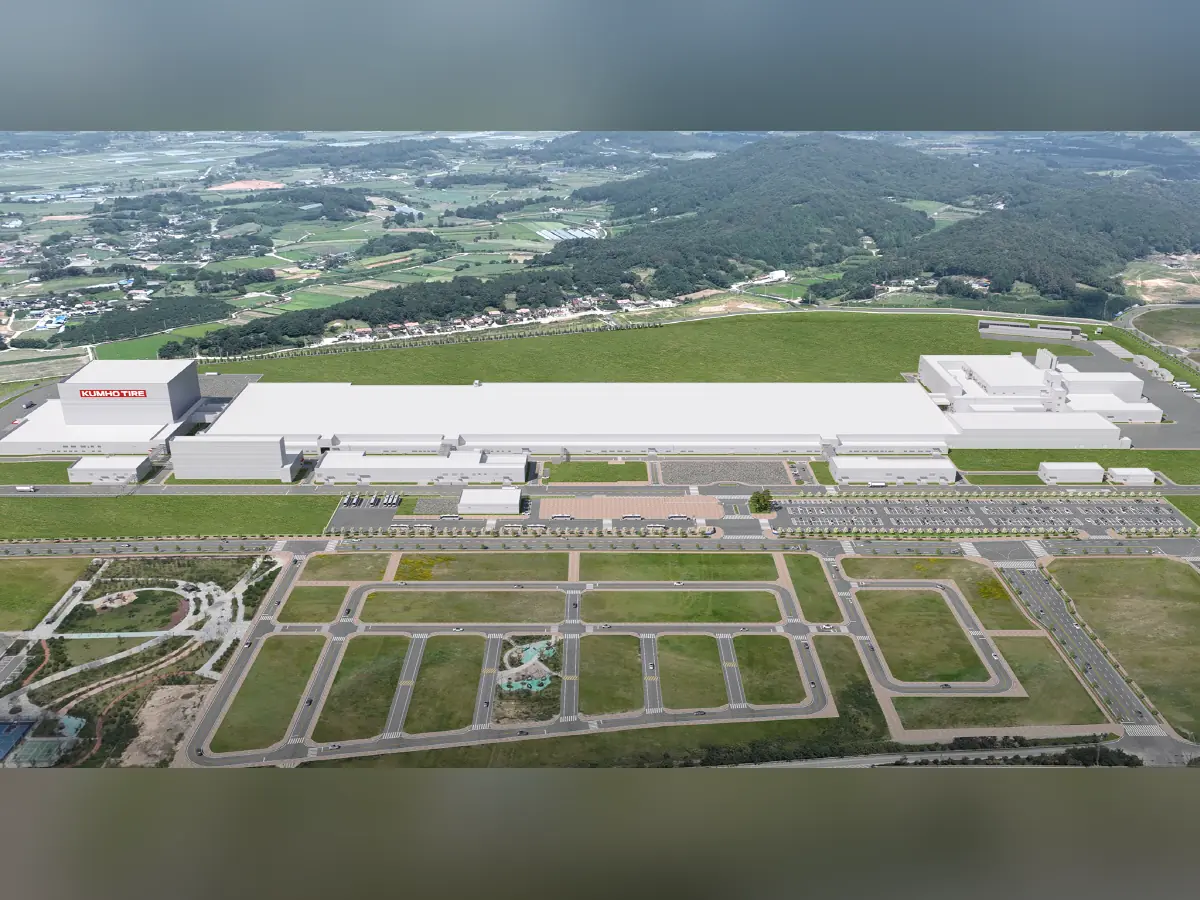

Kumho Tire's new manufacturing facility in Hampyeong, South Korea, is progressing towards a planned production start in April 2028. The first phase represents an investment of KRW 760.8 billion and is designed to produce 5.3 million tyres annually.
Construction of the factory at the Bitgreen National Industrial Complex was 8% complete according to a progress report published on 2 November 2026. The latest development came on 19 November, when parent company Qingdao Doublestar approved plans to seek KRW 10 billion in local government subsidies.
The project has developed through several years of relocation planning, a major fire at Kumho's existing Gwangju plant, revised investment commitments and contracts for automated manufacturing logistics.
The following timeline traces the principal milestones and the schedule ahead.
Kumho Tire's plans to relocate manufacturing from its ageing Gwangju facilities predate the major factory fire of May 2025.
Discussions about relocation were reported as early as 2019, although the first clearly documented milestone in the company's subsequent corporate reporting came on 30 December 2021.
On that date, Kumho signed an agreement with Korea Land & Housing Corporation (LH) concerning the development of a new site for relocating Gwangju production.
The agreement established a formal basis for the proposed relocation.
Kumho Tire signed a land purchase agreement with LH for its planned replacement manufacturing site.
The company's corporate disclosures confirm that it paid a deposit equivalent to 10% of the purchase price.
The agreement demonstrated that preparations for a new manufacturing location were advancing before the disruption at Gwangju the following year.
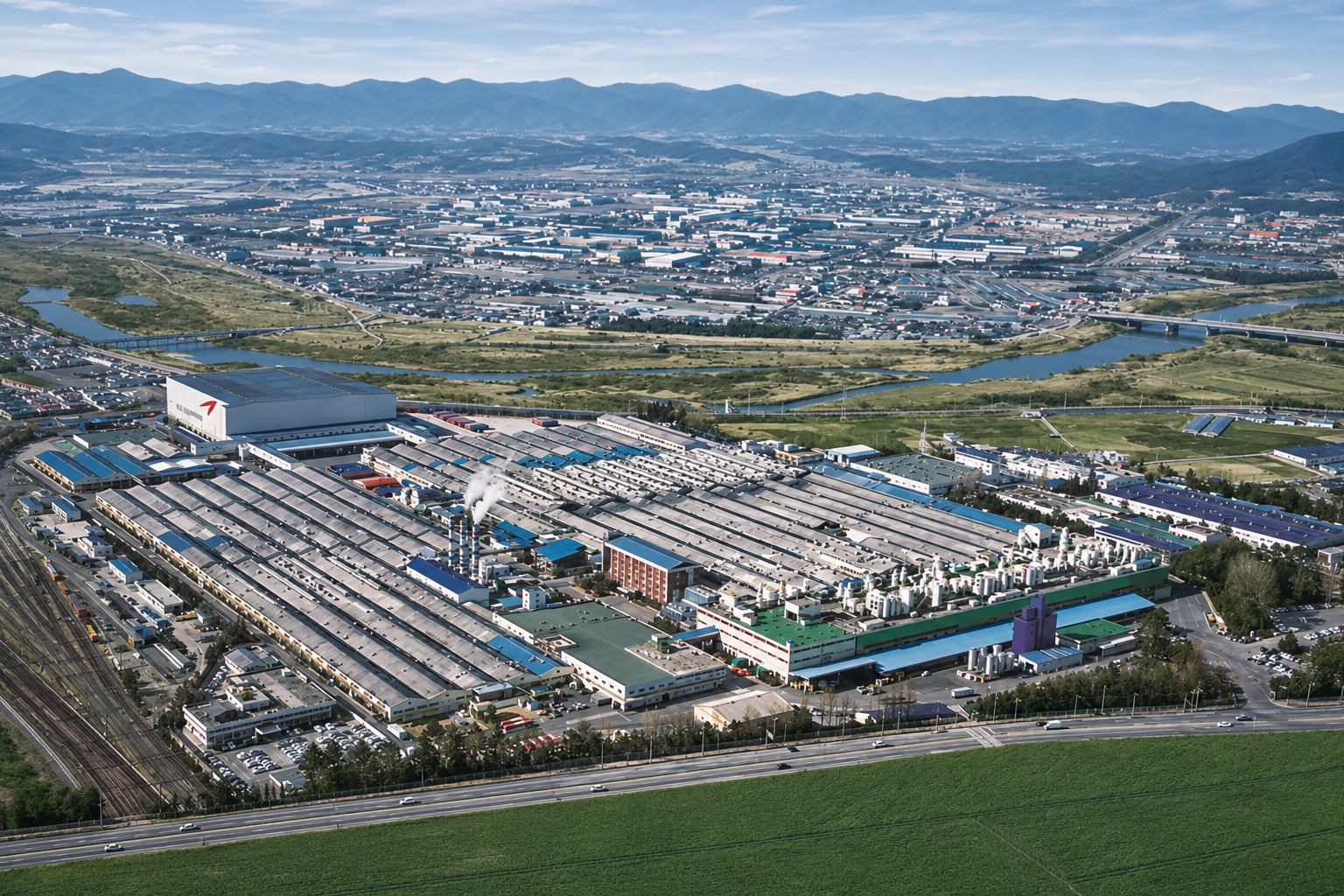
A major fire struck Kumho Tire's existing Gwangju manufacturing complex, severely disrupting tyre production.
The incident increased the immediate importance of recovering manufacturing capacity alongside the company's longer-term relocation plans.
TNM reported the incident in Major Fire Halts Production at Kumho Tire's Gwangju Plant.
The damaged Gwangju facility and the planned Hampyeong factory are separate sites. The new factory project was already under development before the fire occurred.
Kumho Tire reached an agreement with employee representatives covering both the recovery of production at Gwangju and development of the new Hampyeong factory.
The agreement envisaged restarting Gwangju Plant 1 at approximately 6,000 tyres per day and proceeding with the first phase of construction at Hampyeong.
That first phase was designed to deliver annual manufacturing capacity of 5.3 million tyres.
Further expansion at Hampyeong was linked to the eventual sale of the existing Gwangju site.
The agreement connected short-term production recovery with the company's longer-term manufacturing relocation.
Kumho Tire's board formally approved an investment of KRW 660.917 billion in the new factory.
The original investment timetable ran until 31 January 2028.
This approval established the financial commitment behind the first phase of development, separately from the construction agreements and physical works that followed.
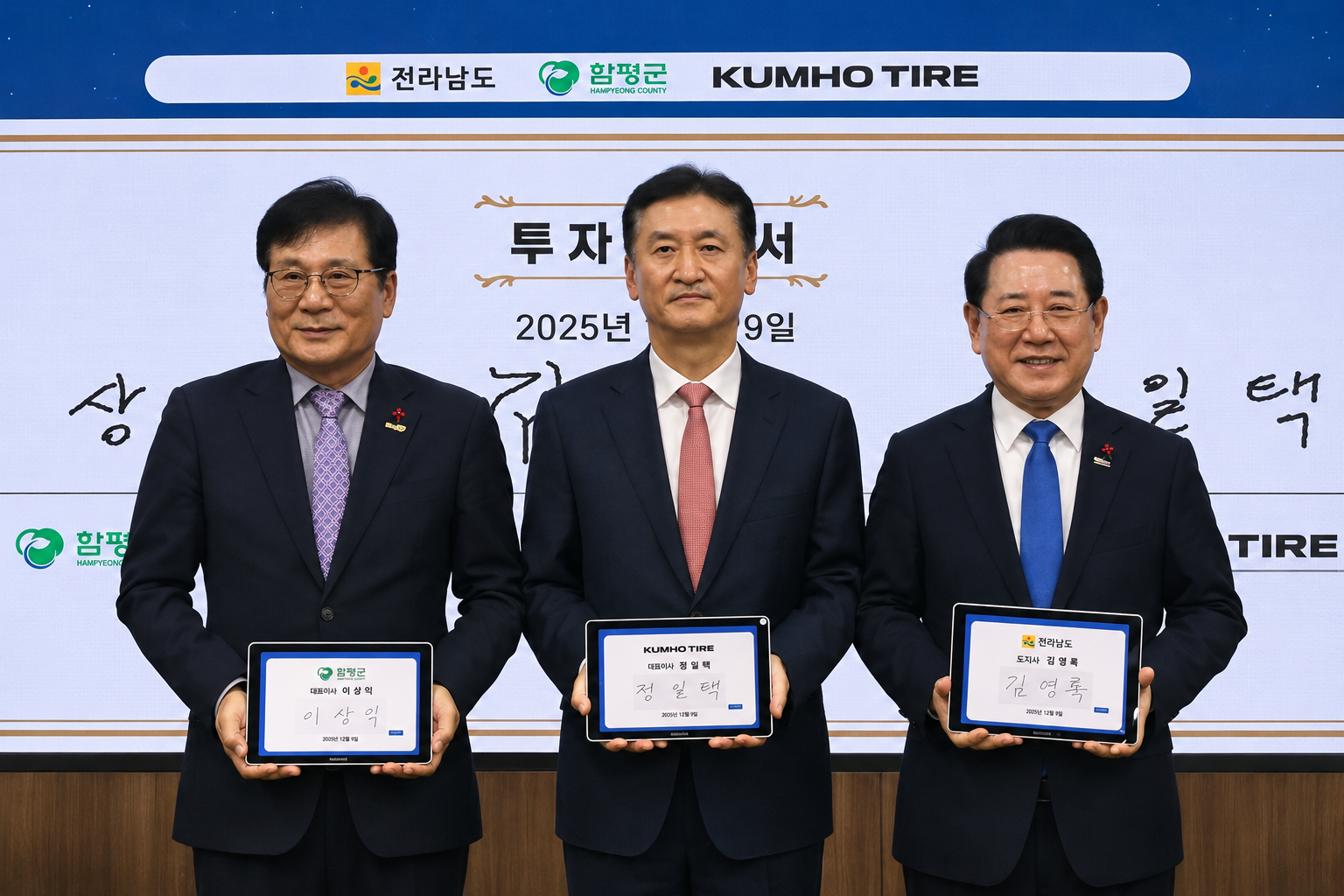
On 9 December, Kumho Tire signed an investment agreement with South Jeolla Province and Hampyeong County.
The agreement supported development of the new factory at the Bitgreen National Industrial Complex.
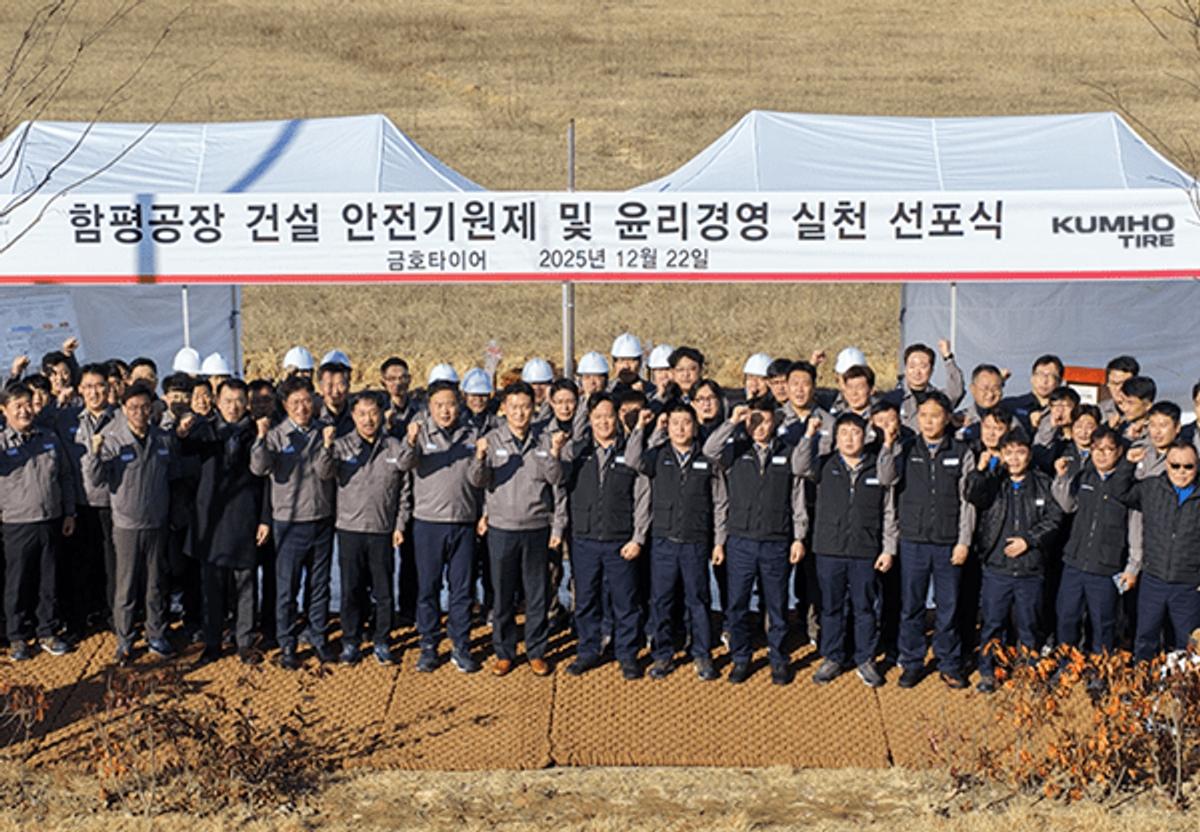
On 22 December, management and employee representatives attended a construction safety ceremony at the site.
The project included a tyre manufacturing facility capable of producing 5.3 million tyres annually, supported by rubber refining facilities with capacity equivalent to approximately seven million tyres.
Kumho Tire revised its investment commitment from KRW 660.917 billion to KRW 760.765 billion.
The additional KRW 99.848 billion represented an increase of approximately 15.1%.
According to the company's stock exchange disclosure, the investment period was also extended from 31 January to 31 March 2028.
The increased funding was associated with construction and production equipment requirements as Kumho advanced plans for a modern manufacturing operation, including higher-value tyre production.
The revised investment-period end date is a financial disclosure milestone, rather than confirmation of when commercial tyre production will begin.
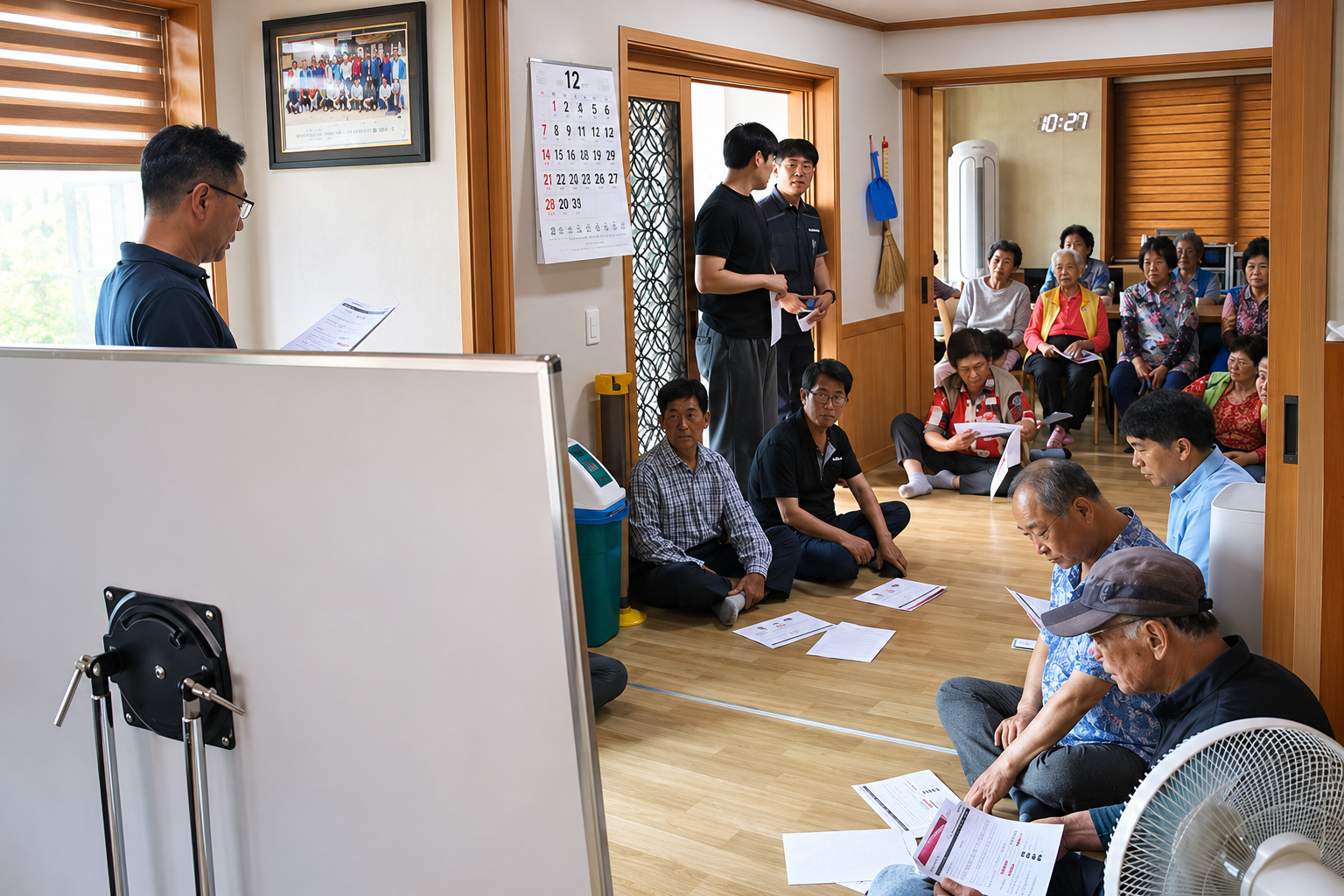
Kumho Tire held a briefing for residents living near the proposed manufacturing facility.
The company outlined measures intended to address environmental and operational concerns during development and future operation.
These included the proposed use of liquefied natural gas (LNG), bag-filter dust collection equipment and odour treatment systems.
The measures formed part of the factory's environmental planning, although their effectiveness will depend on implementation and operation.
A site visit by Hampyeong County officials provided an update on construction activity.
Reports indicated that the warehouse building had been completed and work was progressing on the rubber refining facility.
The refining operation is intended to prepare rubber compounds for subsequent tyre production, forming an important part of the factory's planned manufacturing process.
Hyundai Movex announced a KRW 72 billion contract to supply an integrated logistics automation system for the Hampyeong factory.
The agreement covers automated storage and retrieval systems, automated guided vehicles, autonomous mobile robots, rail-guided vehicles and conveyor equipment.
Warehouse management and control software will coordinate movements across the facility.
According to Hyundai Group's announcement, the systems are designed to connect the handling of raw materials, intermediate products and finished tyres.
The company also plans to incorporate real-time material tracking, AI-assisted logistics volume forecasting and automated route optimisation.
These technologies are intended to reduce manual handling and improve the coordination of material movements between manufacturing stages.
The contract runs until October 2028, several months after Kumho's latest reported target for beginning tyre production.
The two dates refer to different project milestones and do not necessarily indicate a delay to initial manufacturing.
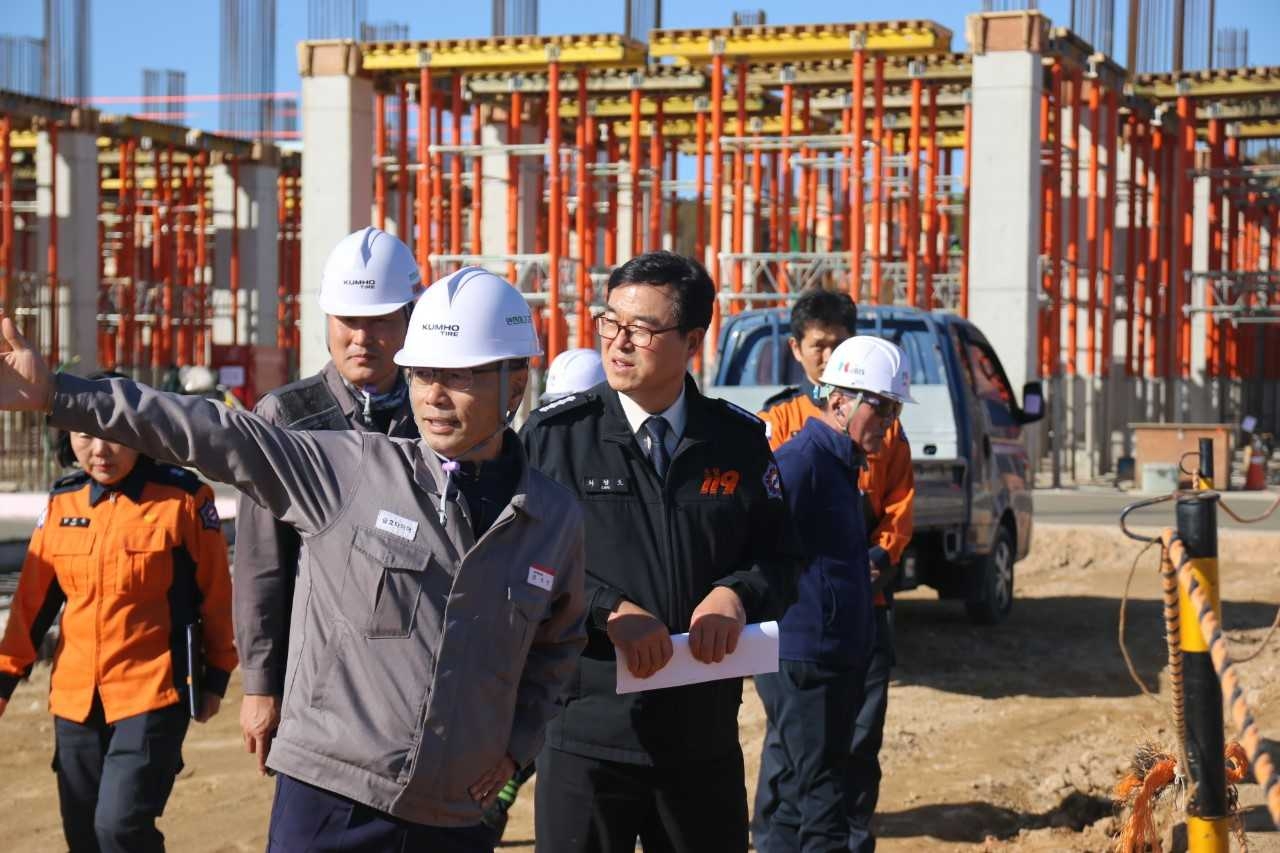
Local fire authorities inspected the Hampyeong construction site as work continued.
The inspection covered fire prevention arrangements and construction safety measures ahead of the factory's planned opening in 2028.
The review was particularly relevant to a major manufacturing development involving industrial equipment and rubber processing facilities.
There is no confirmed evidence that the inspection was specifically prompted by the earlier Gwangju fire.
A construction update reported by South Korean news agency Yonhap provided the clearest assessment of the project's progress.
According to the report, overall construction had reached 8%, while the warehouse building was complete.
The rubber refining building, where construction began in May 2026, was 28% complete.
Kumho's reported schedule called for the refining building to be completed in June 2027, allowing rubber supply operations to begin in July.
Construction of the main tyre production building was scheduled to begin in November 2027.
The company was targeting April 2028 for tyre production.
These percentages reflect construction progress reported on 2 November, rather than a live assessment of the site.
Qingdao Doublestar's board approved a proposal for Kumho Tire to apply for KRW 10 billion in cash subsidies from Hampyeong County authorities.
According to the parent company's regulatory announcement, the proposed assistance comprises KRW 5 billion towards land costs and KRW 5 billion towards manufacturing facilities.
Kumho also proposes to use its Gwangyang logistics centre as collateral in connection with the subsidy arrangements.
The proposed subsidy payments would be claimed in stages, subject to the applicable conditions.
Importantly, the board's decision authorises the proposed application and collateral arrangements. It does not establish that the KRW 10 billion has already been awarded or received.
The development adds a further funding-related milestone to the factory's construction timeline.
Several important stages remain before the Hampyeong facility reaches its planned manufacturing capacity.
The rubber refining building is scheduled for completion in June 2027, with rubber supply operations targeted for July 2027.
Construction of the main tyre production building is due to begin in November 2027.
Kumho's revised regulatory investment period ends on 31 March 2028, while the latest reported target for starting tyre production is April 2028.
Hyundai Movex's logistics automation contract is scheduled to conclude in October 2028.
These milestones cover different aspects of construction, investment and equipment delivery. The start of production should not be interpreted as confirmation that the factory will immediately operate at its full annual capacity.
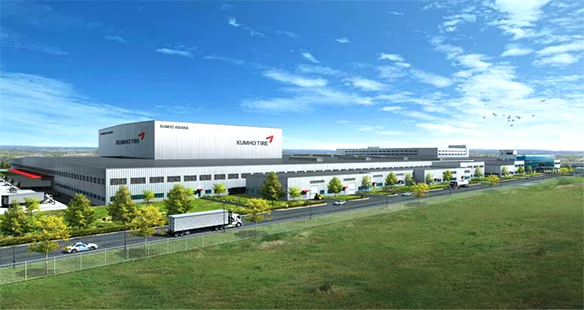
Kumho Tire has outlined a second phase of development that could increase Hampyeong's total annual production capacity to approximately 12 million tyres.
The proposed expansion has been linked to the eventual disposal of the company's existing Gwangju manufacturing site.
However, no confirmed completion date has been established for this second phase.
For now, the next significant milestone is the planned completion of the rubber refining building in June 2027, followed by the start of rubber supply operations in July.
Tags: Kumho Tire, Hampyeong factory, Gwangju factory, Qingdao Doublestar, tyre manufacturing, South Korea, Hyundai Movex, tyre factory investment, industrial automation, tyre production, factory construction, manufacturing capacity.
Editorial Standards & Disclaimer
Tyre News Media is an independent industry publication. Our reporting is based on information available at the time of publication, including company announcements, regulatory filings, official data, research and other sources considered reliable.
Articles may include independent analysis and editorial interpretation. Where appropriate, company statements and third-party claims are attributed to their source. Analysis, estimates and forward-looking observations should not be read as statements of established fact.
Tyre News Media takes reasonable steps to ensure accuracy but welcomes corrections, clarifications and responses from organisations or individuals covered in our reporting. If you believe information is inaccurate or requires clarification, please contact info@tyrenews.co.uk. Material errors will be corrected as appropriate.
Commercial relationships, advertising and sponsorship do not determine Tyre News Media's editorial coverage or conclusions.


Tyre Industry Business Directory
Search manufacturers, suppliers, wholesalers, service providers and industry partners across the tyre sector.
Commercial Relationships
TNM works with sponsors and advertisers across the tyre industry. These relationships help fund open-access journalism while editorial decisions remain independent.

TNM Sponsor
Kumho Tyre (UK) Ltd

Banner Advertiser
Davanti Tyres

Banner Advertiser
Linglong Tyre Co., Ltd

TNM Sponsor
Point S UK Ltd

TNM Sponsor
TyreSafe

TNM Sponsor
Oak Tyres
TNM Sponsor
ENVOY Tyres
Work with TNM
Explore advertising, sponsorship and supporter opportunities across Tyre News Media.
Commercial relationships do not determine TNM editorial coverage or conclusions.