DIGITAL-ONLY · OPEN ACCESS · TYRE INDUSTRY NEWS

China approves tougher rubber industry emission standards in principle, with implications for tyre factory investment and compliance.
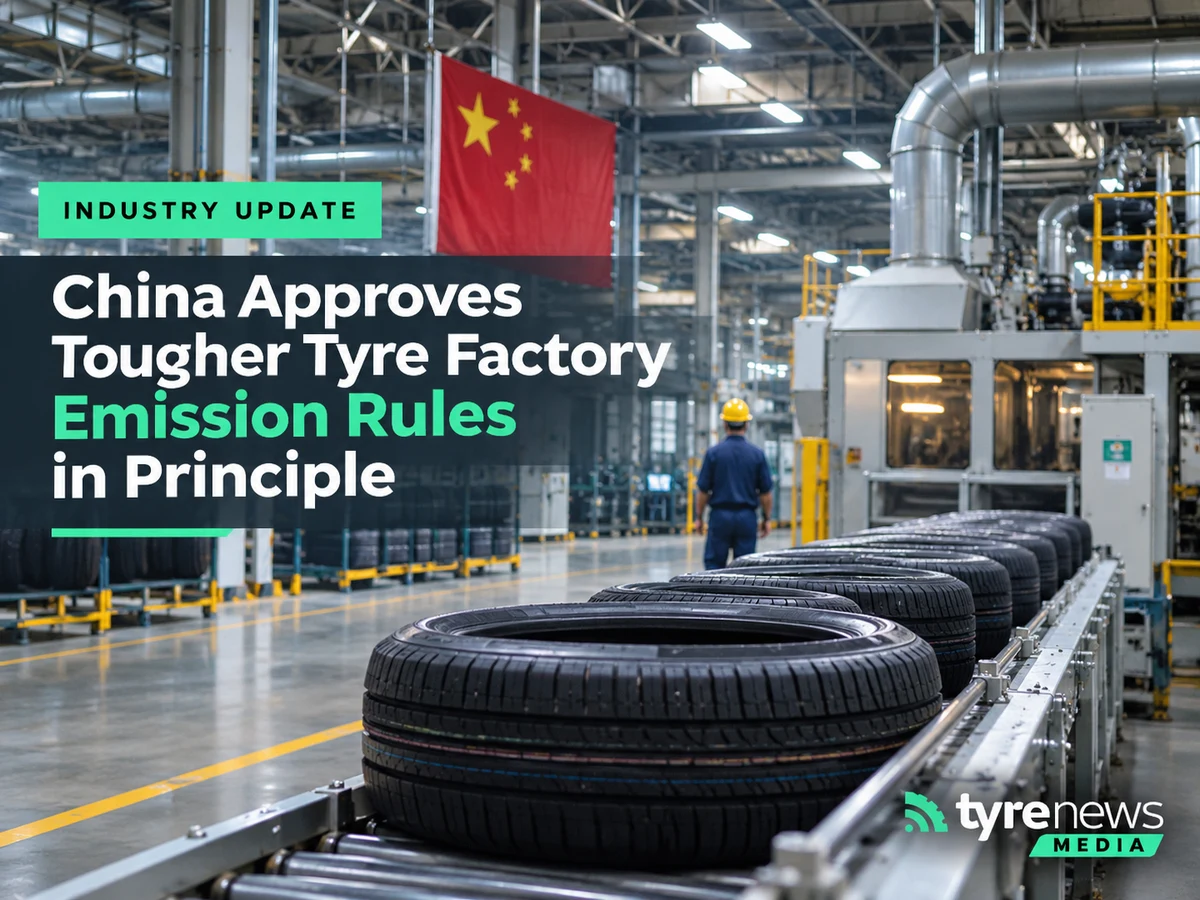

China’s Ministry of Ecology and Environment (MEE) has approved in principle a revised national air-pollutant emission standard for the rubber products industry, bringing tyre manufacturers closer to stricter environmental controls across their production operations.
The decision was made at a ministerial meeting on 20 November 2026 and subsequently reported by the China Rubber Industry Association (CRIA) on 23 November.
The revised standard updates the air-emission provisions of GB 27632-2011, extending regulatory coverage and introducing more comprehensive pollution control requirements across rubber manufacturing.
The changes have implications for both Chinese tyre producers and international manufacturers operating production facilities in the country, particularly in relation to environmental compliance, manufacturing equipment and capital investment.
The Ministry of Ecology and Environment has called for stronger pollution controls throughout production processes, supported by automated monitoring and regulatory enforcement.
The revised standard follows a public consultation launched in July 2026, which proposed changes to emission limits, pollution treatment requirements and the range of manufacturing activities covered by the regulations.
According to the China Rubber Industry Association, shortcomings in the existing standard include its limited coverage of certain rubber processing activities, outdated emission limits and exhaust volume requirements that no longer reflect current manufacturing conditions.
One proposed change is the introduction of exhaust collection and treatment requirements during rubber-sheet cooling.
The revision also places greater emphasis on controlling fugitive emissions. These are pollutants that escape from machinery, production areas or material handling processes rather than being discharged through a designated exhaust system.
For tyre manufacturers, this could require a broader review of how emissions are captured, contained and treated throughout the factory.
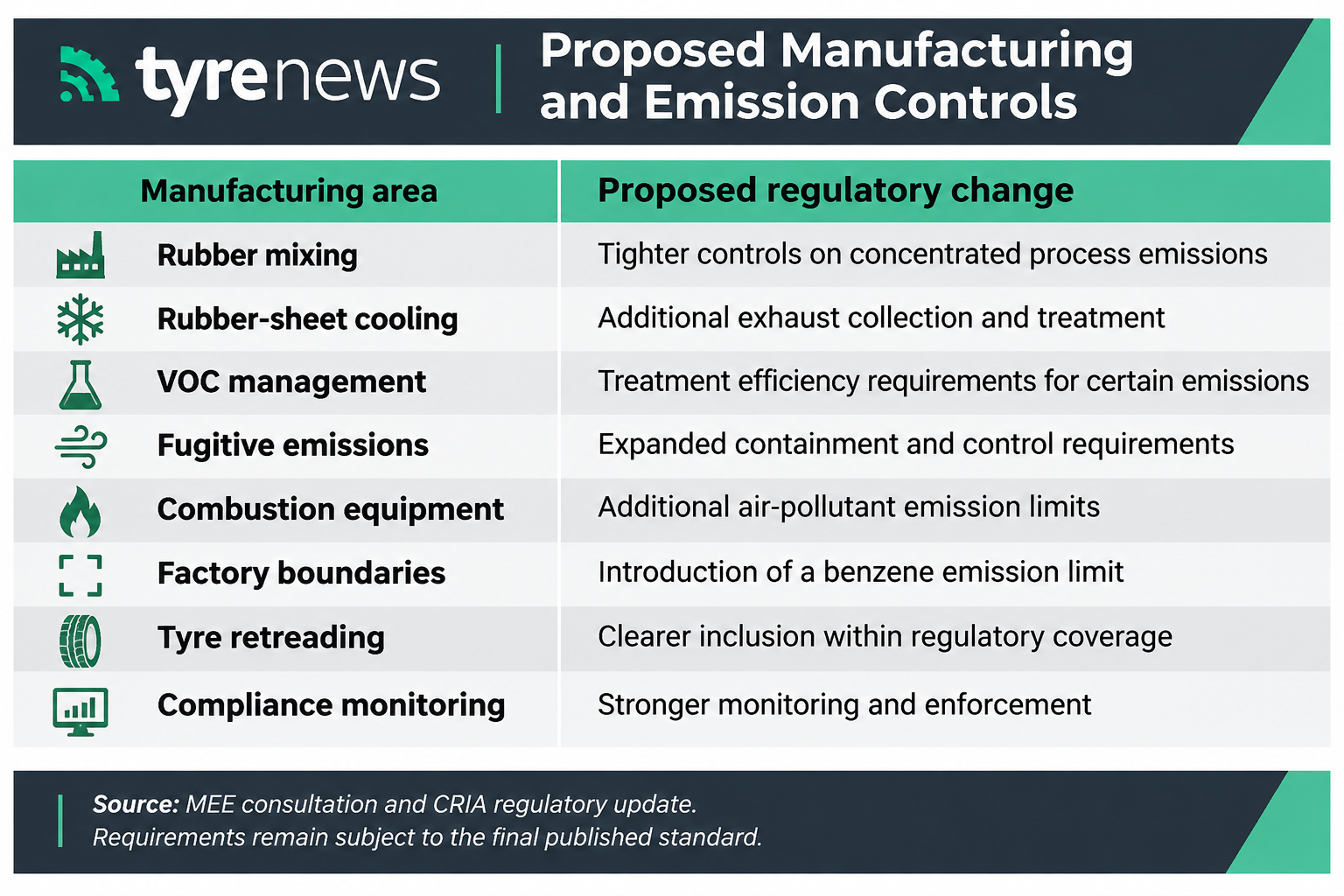
The consultation-stage proposals include a factory boundary limit for benzene of 0.1 mg/m³, alongside sulphur dioxide and nitrogen oxide emission limits of 50 mg/m³ and 150 mg/m³ respectively for combustion equipment.
The proposed changes would also require manufacturers to consider the effectiveness of pollution treatment systems, rather than relying solely on emission concentrations measured at exhaust outlets.
The revised standard is particularly relevant to international tyre manufacturers with established production operations in China.
The requirements relate to manufacturing activities rather than company ownership or nationality, meaning domestic and foreign-owned factories undertaking equivalent processes would face the same applicable environmental standards.
The extent of additional investment will depend on the equipment, production processes and environmental control systems already installed at individual facilities.
Factories with modern ventilation, enclosed production equipment and advanced emission treatment systems may require fewer modifications. Older facilities with less comprehensive pollution controls could face more extensive upgrades.
For international manufacturing groups, the revised requirements could become an additional consideration when assessing factory modernisation programmes and future capital expenditure.
The regulatory changes could create additional demand for specialist manufacturing equipment and environmental technology, including:
Manufacturers will also need to consider the ongoing operating and maintenance costs associated with additional pollution control equipment.
For equipment suppliers, the revision represents a potential opportunity to support existing factory upgrades as well as the environmental design of new manufacturing facilities.
Although the revised standard has received ministerial approval in principle, the final technical requirements, implementation date and transition arrangements remain important outstanding details.
The original MEE public consultation closed on 14 August 2026.
Manufacturers will now be looking towards formal publication of the revised standard to establish which production processes require modification and how much time existing facilities will have to comply.
The November decision brings China closer to a more comprehensive approach to controlling air pollution across rubber manufacturing, with environmental compliance likely to become an increasingly important consideration in tyre factory investment decisions.
Tags: China tyre manufacturing, tyre factory emissions, GB 27632-2011, rubber industry regulation, environmental compliance, VOC emissions, tyre manufacturing investment, pollution control, sustainable manufacturing, China MEE.
Editorial Standards & Disclaimer
Tyre News Media is an independent industry publication. Our reporting is based on information available at the time of publication, including company announcements, regulatory filings, official data, research and other sources considered reliable.
Articles may include independent analysis and editorial interpretation. Where appropriate, company statements and third-party claims are attributed to their source. Analysis, estimates and forward-looking observations should not be read as statements of established fact.
Tyre News Media takes reasonable steps to ensure accuracy but welcomes corrections, clarifications and responses from organisations or individuals covered in our reporting. If you believe information is inaccurate or requires clarification, please contact info@tyrenews.co.uk. Material errors will be corrected as appropriate.
Commercial relationships, advertising and sponsorship do not determine Tyre News Media's editorial coverage or conclusions.





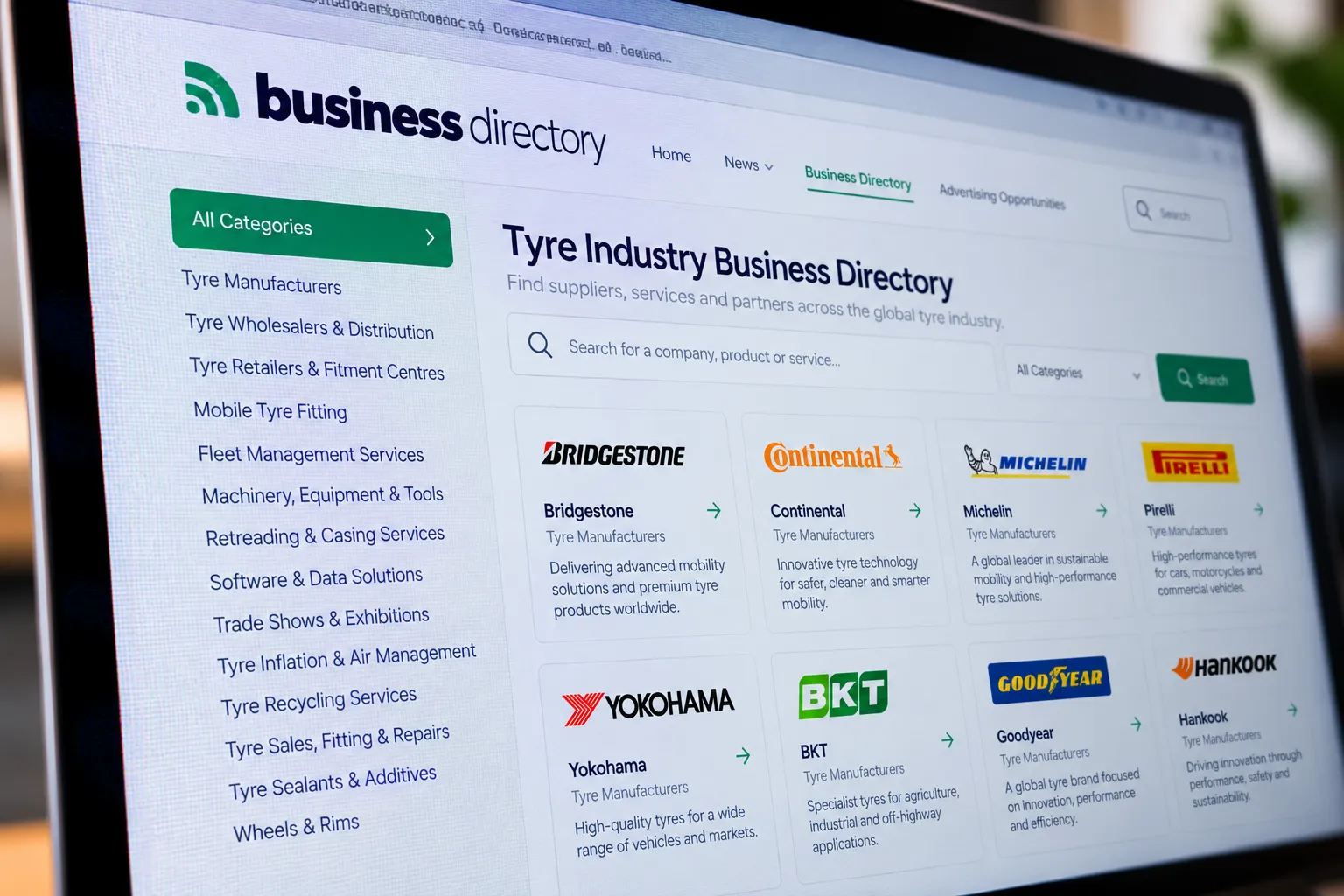
Tyre Industry Business Directory
Search manufacturers, suppliers, wholesalers, service providers and industry partners across the tyre sector.
Commercial Relationships
TNM works with sponsors and advertisers across the tyre industry. These relationships help fund open-access journalism while editorial decisions remain independent.
TNM Sponsor
Kumho Tyre (UK) Ltd

Banner Advertiser
Davanti Tyres

Banner Advertiser
Linglong Tyre Co., Ltd
TNM Sponsor
Point S UK Ltd
TNM Sponsor
TyreSafe

TNM Sponsor
Oak Tyres
TNM Sponsor
ENVOY Tyres
Work with TNM
Explore advertising, sponsorship and supporter opportunities across Tyre News Media.
Commercial relationships do not determine TNM editorial coverage or conclusions.